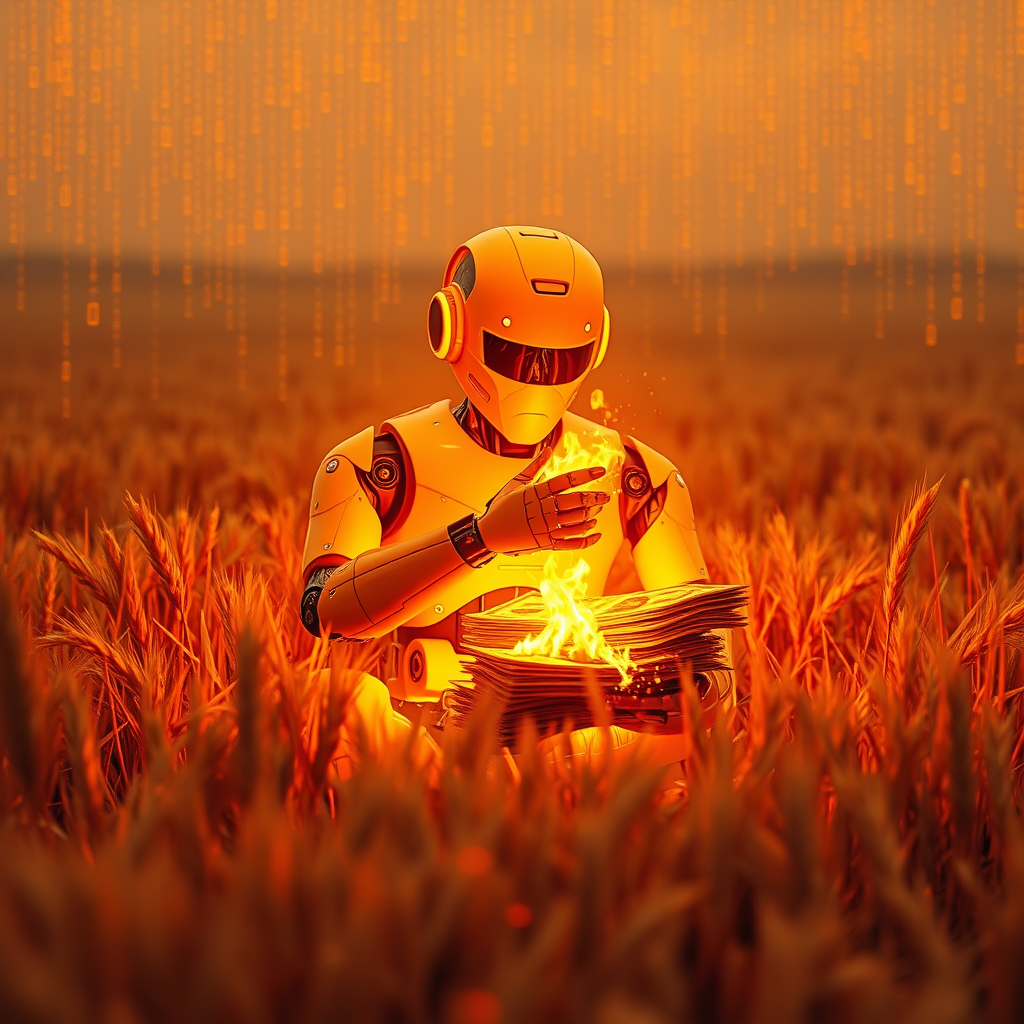
The collision of sun-drenched tradition and the cold, algorithmic hunger of the modern machine
There is a specific, visceral warmth to a field of harvested hay under a late August sun, a golden hue that feels like the very heartbeat of the earth. This vibrant orange, once the color of sustenance and seasonal cycles, has been co-opted by the neon glow of the digital frontier, where the urgency of artificial intelligence markets threatens to overwrite our organic social norms. We are currently witnessing a profound shift in how human value is measured, moving away from the slow, deliberate growth of community toward the frantic, high-frequency extraction of data. As we stand at this crossroads, the tension between the tactile reality of our roots and the synthetic promise of progress becomes impossible to ignore. We must ask ourselves whether we are building a future that serves humanity or merely feeding a machine that views our social interactions as nothing more than raw fuel for its next iteration.
The Golden Harvest of Human Connection
For centuries, the social contract was written in the language of proximity and shared labor, much like the communal effort required to bale hay before the rains arrived. These traditional social norms were rooted in the physical world, where accountability was immediate and the consequences of one’s actions were felt by neighbors and kin. Today, that sense of grounded reality is being eroded by platforms that prioritize engagement metrics over genuine human connection. The digital social norms we now navigate are designed by algorithms that thrive on conflict and rapid consumption, effectively stripping away the nuance that once defined our interpersonal relationships.
When we look at the history of human interaction, we see a trajectory that favored stability and long-term trust over the fleeting dopamine hits of the modern internet. The transition from the field to the screen has not been a neutral evolution, but rather a radical restructuring of our psychological landscape. By commodifying our attention, tech giants have turned the vibrant orange of our natural curiosity into a sterile, predictable stream of data points. This shift has left many feeling untethered, searching for a sense of belonging in a digital space that is fundamentally incapable of providing the warmth of a real-world community. You can read more about the psychological impact of this transition in this analysis of AI and loneliness.
The Satanic Urgency of the AI Market
The current gold rush toward artificial intelligence is marked by a frantic, almost satanic urgency that ignores the long-term health of our social fabric. Investors and developers are racing to automate everything from creative expression to intimate conversation, driven by the belief that speed is the only metric of success. This obsession with synthetic progress creates a visual and conceptual tension, where the organic roots of human creativity are being trampled by the relentless march of automated efficiency. The market does not care about the soul of the work; it cares only about the scalability of the output.
This relentless drive toward automation is not merely a technological advancement, but a fundamental challenge to the concept of human agency. As we outsource our decision-making to black-box algorithms, we lose the ability to navigate the world with our own moral compass. The AI market operates on a logic of extraction, where every human interaction is harvested, processed, and sold back to us in a form that is designed to keep us scrolling. It is a cycle that feeds on our insecurities and our desire for connection, turning the very things that make us human into profitable assets for a handful of massive corporations.
The Erosion of Authentic Discourse
Authentic discourse requires time, patience, and the willingness to be misunderstood, all of which are antithetical to the current digital environment. In the age of AI-generated content, the barrier to entry for creating persuasive, yet hollow, communication has vanished. We are now flooded with synthetic voices that mimic the cadence of human empathy while lacking the lived experience that gives such empathy its weight. This saturation of artificiality makes it increasingly difficult to discern truth from fabrication, leading to a profound crisis of trust in our public and private spheres.
The danger here is not just that we might be fooled by a machine, but that we will eventually lose the capacity to engage in authentic discourse ourselves. When our primary mode of communication is mediated by predictive text and algorithmic curation, our own thoughts begin to conform to the patterns favored by the system. We are effectively training ourselves to be more like the machines we use, adopting a shorthand of expression that prioritizes efficiency over depth. This is a subtle but devastating loss, as it diminishes our ability to articulate complex emotions and nuanced perspectives. For a deeper look at the ethics of this shift, consider the perspectives found in this exploration of generative AI ethics.
Reclaiming the Orange Glow
To reclaim our humanity, we must consciously choose to step away from the frantic pace of the digital market and return to the practices that ground us in reality. This means prioritizing face-to-face interactions, engaging in slow-form creative work, and resisting the urge to let algorithms dictate our social priorities. The vibrant orange of the hay field serves as a powerful metaphor for this resistance; it represents a world that is tangible, seasonal, and inherently human. We must find ways to integrate technology into our lives without allowing it to become the primary architect of our social norms.
This is not a call to abandon technology, but rather a demand for a more intentional relationship with the tools we use. We need to build digital spaces that prioritize human well-being over corporate profit, creating environments where genuine connection can flourish. By fostering digital literacy and demanding transparency from the companies that control our digital infrastructure, we can begin to shift the balance of power back toward the individual. It is a difficult path, but it is the only way to ensure that our future is defined by human values rather than the cold, calculated logic of the machine. You can find more resources on digital well-being at The Center for Humane Technology.
Final Thoughts
The tension between the organic roots of our past and the synthetic progress of our future is the defining challenge of our time. We are currently at a point where the choices we make will determine whether we remain the masters of our tools or become the subjects of our own creations. By recognizing the value of the slow, the tangible, and the authentic, we can begin to build a digital world that reflects the warmth of the sun rather than the cold glare of the screen. Let us choose to nurture the human spirit, ensuring that the vibrant orange of our shared reality remains the guiding light in an increasingly automated world.