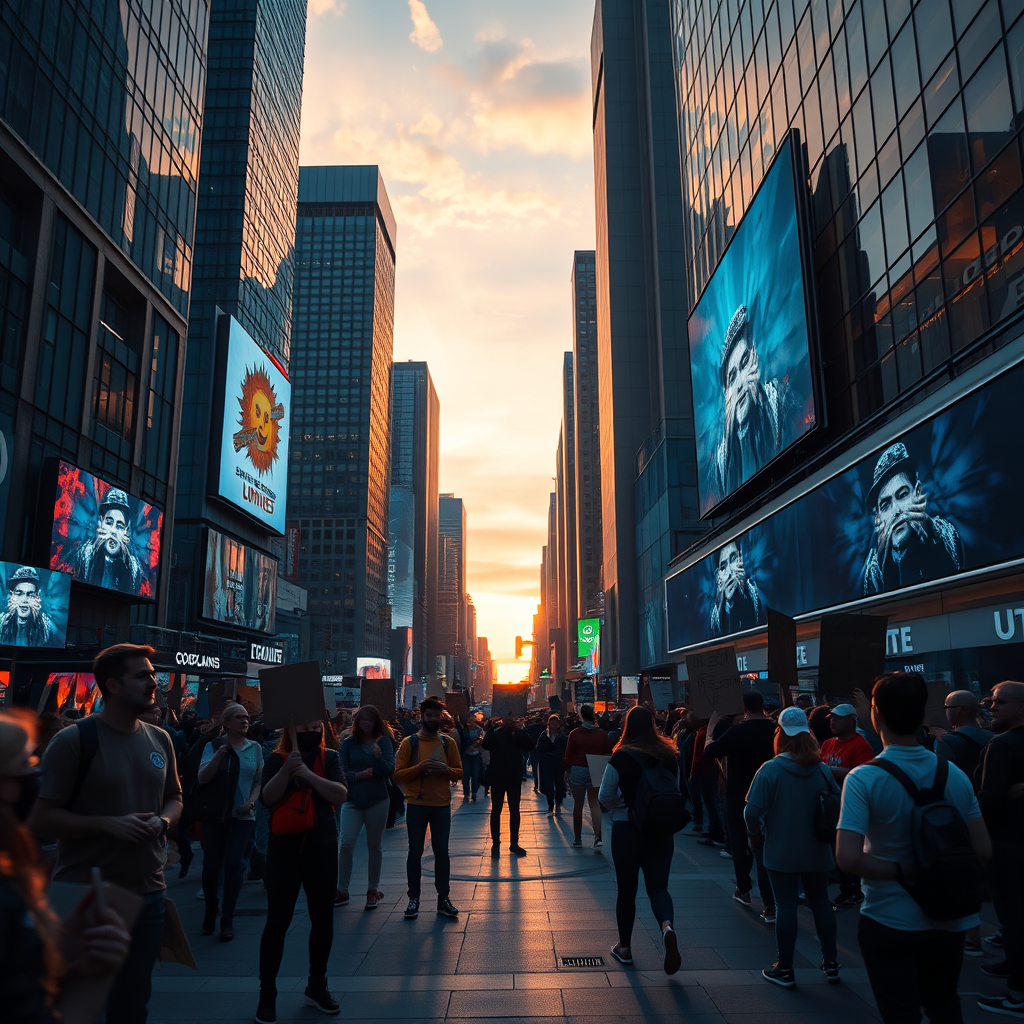
The Visual Language of Modern Dissent and the Fractured Global Landscape
The streets of our modern era are no longer painted in the muted, monochromatic tones of traditional political discourse. Instead, we are witnessing a radical shift in the aesthetic of resistance, where high-contrast palettes serve as a direct reflection of our fractured reality. The burning, visceral urgency of the earth is increasingly represented by searing oranges, clashing violently against the sterile, industrial blues of corporate boardrooms and government chambers. This color theory is not merely a stylistic choice but a profound statement on the global dissonance that defines our current political climate. As activists take to the streets, they are utilizing these visual cues to highlight the widening chasm between the survival of the planet and the cold, calculated indifference of those in positions of power.
The Psychology of High-Contrast Protest
Color has always been a weapon in the arsenal of the revolutionary, but the current reliance on the orange-blue dichotomy is particularly telling. Orange, in its most aggressive and heated form, mimics the glow of wildfires, the intensity of a setting sun, and the warning lights of a civilization in distress. It demands attention, forcing the viewer to confront the immediate, tangible consequences of environmental collapse and social inequality. When this hue is juxtaposed against the deep, icy blues of institutional architecture, the effect is one of jarring discomfort. This visual friction mirrors the systemic inequality that prevents meaningful change from taking root in our legislative halls.
By leveraging these specific colors, modern protest movements are tapping into a primal psychological response that transcends language barriers. The blue represents the cold, unyielding nature of bureaucracy, a space where human suffering is reduced to data points and quarterly projections. Meanwhile, the orange serves as a reminder of the human element, the heat of the crowd, and the literal warming of the world that the blue-clad officials refuse to acknowledge. This aesthetic strategy is designed to make the observer feel the tension, creating a sense of urgency that cannot be ignored or filed away in a cabinet. You can explore more about the psychology of color in protest movements at The Guardian, which often covers the intersection of art and activism.
The Industrial Blue of Institutional Indifference
The cool, industrial blues that dominate our modern centers of power are not accidental; they are the colors of authority, stability, and detachment. These shades are designed to project an image of calm, rational governance, yet they often mask a profound lack of empathy for the crises unfolding outside their glass-walled offices. When activists drape their banners in these same blues, they are reclaiming the color, turning the symbol of the establishment against itself. It is a way of saying that the institutions meant to protect us have become cold, unfeeling, and fundamentally disconnected from the reality of the people they serve.
This detachment is the primary driver of the modern protest movement, which seeks to bridge the gap between policy and lived experience. The blue of the boardroom is a color of containment, meant to keep the chaos of the outside world at bay. However, as the climate crisis intensifies, that containment is failing, and the blue is beginning to look less like stability and more like stagnation. For further reading on how institutional design influences public perception, visit ArchDaily to see how architecture shapes our political interactions.
The Burning Urgency of the Earth
If blue is the color of the boardroom, then orange is the color of the earth in revolt. It is the hue of the wildfire, the drought-stricken field, and the sunset over a smog-choked horizon. This color represents the climate emergency that has become the central focus of contemporary activism, demanding that we look at the world not as a resource to be managed, but as a living system that is currently under siege. The use of this color is an act of defiance, a way of bringing the heat of the planet directly into the cool, air-conditioned spaces where decisions are made.
The intensity of this orange is meant to be uncomfortable, a visual representation of the fever that is currently gripping our biosphere. It is a call to action that bypasses the intellect and speaks directly to the survival instinct. When activists use this color, they are signaling that the time for polite debate has passed and that we are now in an era of radical, necessary disruption. This is not just about aesthetics; it is about reclaiming the narrative from those who would prefer to keep the conversation within the safe, muted tones of the status quo.
The Dissonance of Modern Governance
The clash between these two worlds—the orange of the streets and the blue of the state—is the defining conflict of our time. It is a global dissonance that manifests in every aspect of our lives, from the way we consume information to the way we participate in our democracies. The boardrooms continue to operate on a timeline of fiscal quarters and election cycles, while the earth operates on a timeline of geological change and ecological tipping points. This fundamental misalignment is what creates the friction that we see in our streets today.
We are witnessing a breakdown in the social contract, where the institutions that were once trusted to manage our collective future are now seen as the primary obstacles to it. The visual language of protest is simply the most visible symptom of this deeper, more systemic failure. As we move forward, it is clear that the old ways of doing things are no longer sufficient to address the scale of the challenges we face. The dissonance is not going away; it is only growing louder, and the colors of our resistance are becoming more vibrant, more urgent, and more impossible to ignore.
Final Thoughts
The visual evolution of protest is a testament to our collective need to make the invisible visible. By utilizing the high-contrast tension between the burning orange of the earth and the cold blue of the establishment, activists are creating a new language of dissent that speaks to the urgency of our moment. This is a call for us to look beyond the surface and recognize the deep, structural fractures that are currently tearing our world apart. We must continue to push for a future where our institutions are as vibrant and alive as the planet they are meant to protect, rather than remaining trapped in the cold, blue silence of the past.