
Category: Ancient & Alt

Connecting modern digital freedom with old-world wisdom and General Revelation found in Creation.

  • Mechanical Heavens: Studying Ancient Violations of Life

    Mechanical Heavens: Studying Ancient Violations of Life

    Where the Echoes of Pagodas Meet the Silence of Synthetic Stars

    The intersection of history and futurity often manifests in the most unexpected visual languages, where the warmth of tradition clashes with the sterile chill of the machine. When we examine the aesthetic evolution of human design, we find that the juxtaposition of deep gold and celestial blue serves as a bridge between the organic sanctity of ancient Asian architecture and the cold, calculated precision of our mechanical future. This color palette is not merely decorative; it represents a profound philosophical inquiry into how we define the boundaries of life itself. By analyzing these visual markers, we can begin to understand how humanity attempts to reconcile its biological origins with the inevitable rise of synthetic existence. As we look toward the horizon of technological advancement, these hues remind us that even in a world of circuits and steel, the human spirit seeks to anchor itself in the timeless beauty of the past.

    The Alchemy of Ancient Warmth

    Ancient Asian architecture, particularly the intricate woodwork of temples and palaces, has long relied on the application of gold leaf to signify divinity and permanence. This deep gold is not simply a color but a material manifestation of light, designed to catch the sun and radiate a sense of eternal life. When we study the structural integrity of these historical sites, we see a reverence for the natural world that is increasingly absent in modern engineering. The use of gold serves as a protective layer, a way to preserve the wood against the ravages of time and decay. It is a testament to the human desire to defy entropy, creating spaces that feel as though they have been touched by the heavens themselves.

    In contrast, the modern obsession with efficiency often strips away this decorative warmth in favor of minimalist, functional surfaces. However, the most visionary designers are now returning to these ancient motifs to soften the harsh edges of futuristic life. By integrating the deep, lustrous gold of the past into the sleek, metallic frameworks of the present, we create a hybrid aesthetic that feels both grounded and transcendent. This synthesis allows us to maintain a connection to our cultural heritage while embracing the rapid evolution of our technological capabilities. It is a delicate balance, one that requires a deep understanding of both the history of craftsmanship and the demands of modern innovation, as explored in the Metropolitan Museum of Art archives on Asian decorative arts.

    The Cold Precision of Celestial Blue

    If gold represents the warmth of the earth and the divine, then celestial blue represents the infinite, cold expanse of the cosmos. This shade, often found in the intricate porcelain work of the Ming Dynasty or the deep indigo dyes of traditional textiles, has become the signature color of the digital age. It is the color of the screen, the glow of the fiber optic cable, and the vast, unfeeling sky of a science fiction landscape. When we pair this blue with the deep gold of ancient architecture, we create a visual tension that perfectly encapsulates the struggle between the organic and the synthetic. It is a reminder that while we reach for the stars, we are still tethered to the traditions that shaped our early understanding of the universe.

    The mechanical precision of our future is often characterized by a lack of human touch, a world where algorithms dictate the flow of existence. Celestial blue acts as a cooling agent in this environment, providing a sense of calm and clarity amidst the chaos of rapid technological change. It is a color that suggests distance and objectivity, qualities that are highly valued in the development of artificial intelligence and robotics. Yet, when this blue is placed alongside the warmth of gold, it loses its clinical edge and becomes something more inviting. This interplay is essential for creating environments that are not only functional but also psychologically resonant for the humans who must inhabit them, a concept discussed in depth by ArchDaily regarding the psychology of color in modern urban design.

    Violations of Life and the Synthetic Shift

    The concept of a mechanical violation of life suggests a transgression, a moment where the natural order is disrupted by the introduction of something artificial. We see this in the way we integrate technology into our own bodies, from simple prosthetics to the theoretical possibilities of neural interfaces. These advancements are often framed as improvements, yet they fundamentally alter what it means to be human. The deep gold and celestial blue palette serves as a visual metaphor for this transition, representing the fusion of the biological and the mechanical. It is a aesthetic that acknowledges the beauty of the human form while simultaneously celebrating the potential of the machine to transcend our physical limitations.

    As we move further into this era of synthetic existence, the line between the living and the non-living becomes increasingly blurred. We are creating machines that can learn, adapt, and perhaps even feel, challenging our traditional definitions of consciousness. This shift is not without its anxieties, as many fear that the mechanical will eventually replace the organic entirely. However, by embracing a design language that honors both the ancient and the futuristic, we can create a narrative of coexistence rather than replacement. This approach allows us to view our technological evolution not as a violation, but as an expansion of the human experience, a theme often echoed in the discussions found on Wired about the future of human-machine integration.

    Architectural Bridges to the Future

    The architecture of the future will likely be defined by its ability to synthesize these disparate elements into a cohesive whole. We are already seeing the rise of biomimetic structures that use advanced materials to mimic the efficiency of nature while maintaining the strength of industrial engineering. These buildings are not just shelters; they are living systems that interact with their environment in real-time. By incorporating the deep gold and celestial blue color scheme, these structures can evoke a sense of history and continuity, even as they push the boundaries of what is possible. It is a way of ensuring that our future cities do not feel like alien landscapes, but rather like the next chapter in the long story of human civilization.

    Furthermore, the use of these colors in public spaces can foster a sense of community and shared identity in an increasingly fragmented world. When we design environments that reflect our collective history and our shared aspirations for the future, we create a sense of belonging that transcends the individual. This is particularly important as we face the challenges of climate change and social inequality, where the need for unity has never been greater. By grounding our technological advancements in the aesthetic traditions of the past, we can create a future that is not only efficient and innovative but also deeply human. It is a vision of progress that values the wisdom of our ancestors as much as the potential of our descendants.

    Final Thoughts

    The journey from the ancient temple to the mechanical heaven is a testament to the enduring power of human creativity and our relentless drive to understand our place in the universe. By utilizing the deep gold and celestial blue palette, we are able to weave together the threads of our past and our future into a tapestry that is both beautiful and profound. This visual language serves as a constant reminder that we are the architects of our own destiny, capable of building worlds that honor the sanctity of life while embracing the infinite possibilities of the machine. As we continue to navigate the complexities of this new era, let us hold fast to the lessons of history while keeping our eyes fixed on the stars. The mechanical heavens are not a destination, but a reflection of our own capacity to dream, to build, and to evolve beyond the constraints of our biological origins.

  • Gothic Hedonism: Ancient Alt-Lifestyle Aesthetics

    Gothic Hedonism: Ancient Alt-Lifestyle Aesthetics

    Where Shadow Meets Silk: Unearthing the Allure of Dark Antiquity

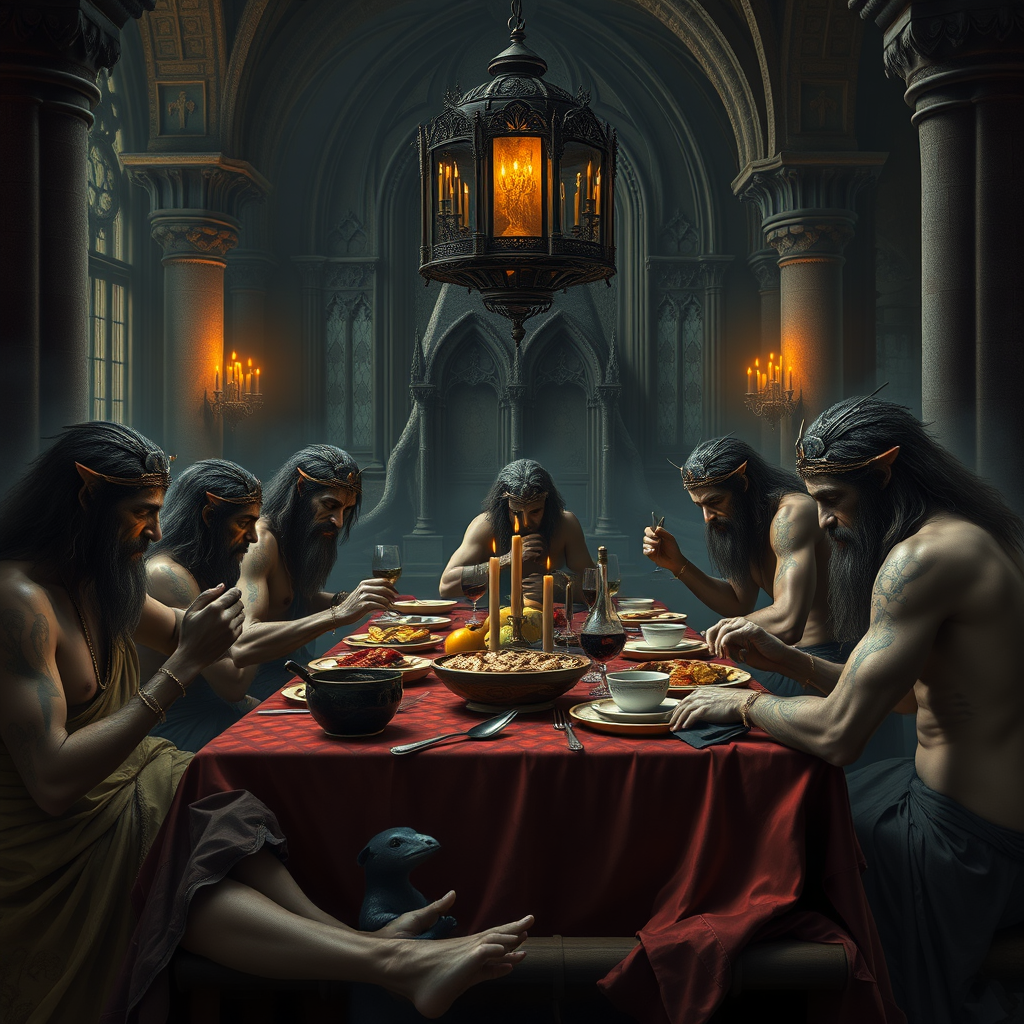
    The modern aesthetic landscape is often characterized by fleeting trends, yet some styles possess an enduring, almost magnetic pull that transcends the ephemeral. Gothic Hedonism is not merely a fashion statement; it is a philosophical alignment, a deliberate choice to inhabit spaces saturated with history, drama, and unapologetic sensory pleasure. This unique subculture draws deeply from the visual vocabulary of the late Medieval period, the decadent excesses of the Victorian era, and the rich, often tragic, narratives of classical antiquity. We explore how the strategic deployment of deep blacks, the visceral impact of rich crimsons, and the grounding texture of aged parchment tones create an environment where darkness is not absence, but presence, inviting indulgence without apology.

    The Palette of Power: Black, Blood, and Sepia

    The foundation of Gothic Hedonism rests firmly on its color strategy, a deliberate rejection of bright, superficial palettes. Deep, velvety black serves as the canvas, absorbing light and demanding introspection, mirroring the profound depths of historical contemplation. This is not the flat black of modern minimalism, but the nuanced black found in aged velvet, obsidian, or the ink of forgotten manuscripts. When paired with rich crimson—the color of spilled wine, crushed velvet theater seats, and vital life force—the contrast becomes immediate and intoxicating. This duality speaks to the core tension of the lifestyle: the embrace of mortality alongside the celebration of intense, immediate experience.

    The third essential component, aged parchment, acts as the necessary counterpoint, preventing the aesthetic from collapsing into pure shadow. This tone, reminiscent of vellum scrolls and crumbling library walls, introduces the element of ancient wisdom and enduring legacy. Imagine a room where heavy black drapery frames a window overlooking a moonlit garden, the only illumination coming from flickering candlelight reflecting off gilt-edged, leather-bound tomes whose pages have yellowed over centuries. This visual language speaks volumes about valuing substance over surface, and history over the present moment. For deeper inspiration on historical color theory, one might explore the works detailing Baroque interior design, which mastered this dramatic interplay of light and shade The Metropolitan Museum of Art’s collection offers superb examples of this chiaroscuro effect in decorative arts.

    Architectural Echoes: Ruins, Ritual, and Refinement

    Gothic Hedonism finds its most potent expression in environments that suggest age, grandeur, and perhaps a touch of beautiful decay. This aesthetic favors architectural elements that tell stories: soaring arches, heavy carved wood, wrought iron detailing, and the deliberate incorporation of elements that mimic ruins or crypts. It is about creating a sanctuary that feels both timeless and slightly dangerous, a place where one can indulge in refined pleasures away from the mundane gaze of the outside world. Think of the elaborate stonework found in European cathedrals, translated into the intimate scale of a private study or salon.

    The hedonistic aspect is woven in through texture and comfort, ensuring that the darkness is luxurious, not oppressive. Heavy silks, deep-pile rugs that swallow sound, and furniture upholstered in rich, jewel-toned fabrics—often burgundy, deep sapphire, or emerald—are crucial. These materials invite touch and linger, encouraging the occupant to slow down and savor the moment, whether that involves reading obscure philosophy or enjoying a complex, aged spirit. This commitment to sensory richness is what elevates the style from mere gloom to true alt-lifestyle aesthetics. Consider the influence of Romantic poets who often sought inspiration in crumbling abbeys and overgrown cemeteries; their environments were curated reflections of their inner worlds.

    The Ritual of Indulgence: Sensory Overload and Subtlety

    Hedonism within this framework is not about cheap thrills; it is about highly curated, meaningful sensory experiences—rituals that honor the body and the mind. This might manifest in the meticulous preparation of elaborate meals featuring dark fruits and rich sauces, or the slow, deliberate brewing of rare teas served in antique silver. The focus shifts from rapid consumption to deep appreciation, a hallmark of true connoisseurship. The atmosphere must support this focus, often achieved through carefully managed lighting.

    Lighting is perhaps the most critical tool in mastering this aesthetic, demanding a move away from harsh overhead illumination. Instead, the space should be illuminated by dozens of low-wattage sources: candelabras dripping with black wax, shaded lamps casting pools of amber light, and perhaps strategically placed uplighting to highlight architectural features or dramatic artwork. This creates pockets of intimacy and shadow, allowing for private contemplation even in a shared space. The pursuit of gothic indulgence requires an understanding that shadow is as important as light in defining form and mood. For those interested in the historical use of candlelight in interiors, research into 18th-century French salons provides fascinating context The Victoria and Albert Museum’s decorative arts section showcases many relevant artifacts.

    Curating the Collection: Artifacts of Obsession

    A space defined by Gothic Hedonism is inherently a collector’s space, filled with objects that carry weight, history, and narrative intrigue. These are not mere decorations; they are talismans of a life lived deliberately. Collections might focus on anatomical drawings, esoteric texts bound in leather, antique scientific instruments, or morbidly beautiful natural history specimens preserved in dark glass jars. The key is that every object must contribute to the overarching narrative of darkness, beauty, and the passage of time.

    The integration of these artifacts must feel organic, as if they have accumulated naturally over generations of passionate pursuit, rather than being purchased in a single shopping spree. Display cases should be heavy, perhaps featuring dark wood or ironwork, protecting precious items while simultaneously framing them dramatically against a backdrop of deep color. This dedication to curated objects reinforces the theme of ancient alt-lifestyle aesthetics, suggesting a deep connection to the past that informs the present experience. Finding inspiration for display techniques can often be found in the old cabinets of curiosity, or Wunderkammern, which celebrated the strange and the beautiful equally. Explore the concept of the dark academia movement for contemporary interpretations of this collecting impulse The Guardian on Dark Academia provides a modern lens.

    Final Thoughts

    Gothic Hedonism is ultimately a commitment to depth—depth of color, depth of history, and depth of experience. It rejects the superficial gloss of the mainstream in favor of an aesthetic that is rich, complex, and profoundly evocative. By mastering the interplay between the starkness of black, the passion of crimson, and the wisdom of parchment, one crafts an environment that is both a fortress against the ordinary and a stage for exquisite living. Embracing this style means choosing a life where beauty is found in the shadows, where history is a constant companion, and where every sensory input is treated as a sacred act of hedonistic pleasure. This is more than just decorating; it is the architecture of a deeply felt, gothic lifestyle, inviting you to savor the darkness and the drama it contains Architectural Digest on Gothic Design.

  • Ancient Earth Rituals: Red, White, and Ecology

    Ancient Earth Rituals: Red, White, and Ecology

    The Primal Palette: Earth Pigments as Ecological Blueprints

    Long before synthetic dyes colored our world, humanity relied on the very ground beneath our feet to express meaning, ritual, and identity. The striking contrast between red and white earth pigments—ochre and kaolin, hematite and chalk—represents more than just ancient aesthetics; it embodies a profound, tangible connection to geological time and local ecology. These raw materials, painstakingly gathered and processed, served as the first language of human visual culture, embedding stories of life, death, and territory directly into the landscape. Understanding these ancient practices offers a vital lens through which to re-examine our modern relationship with natural resources and sustainable community building.

    Ochre’s Deep History: Tracing the Red Thread of Life

    Red ochre, rich in iron oxide, is perhaps the most universally recognized ancient pigment, appearing in cave art from Lascaux to the Australian outback. This vibrant hue was not merely decorative; it often symbolized blood, vitality, and the sacred boundary between the living and the spiritual realms. The acquisition of high-quality ochre required knowledge of specific geological formations, often involving dangerous extraction processes that cemented its value within tribal economies. This deep-seated reverence for the source material contrasts sharply with today’s disposable consumer culture, highlighting a time when every resource held inherent, irreplaceable worth. The chemistry of these pigments tells a story of millennia of weathering and mineral deposition.

    The preparation of red ochre involved grinding and sometimes heating the raw earth to achieve desired shades, a process that demanded communal effort and specialized knowledge passed down through generations. This shared labor fostered strong social bonds centered around the maintenance of cultural memory and ritual practice. When we look at the enduring presence of red earth in funerary rites across continents, we see a consistent human attempt to bridge the physical world with the unseen, using the most fundamental element of the planet—the soil itself. This enduring connection underscores the importance of preserving the landscapes that yield these precious, symbolic materials.

    Kaolin and Chalk: The Purity of White in Ancient Contexts

    White pigments, typically derived from kaolin clay or soft chalk deposits, offered a stark, powerful counterpoint to the intensity of red. Where red often signified action, life force, or danger, white frequently represented purity, transformation, or the spirit world. In many traditions, white body paint was used during rites of passage, signifying a temporary shedding of the old self before re-entering the community in a new status. The very act of seeking out and processing these fine, pale clays speaks to a sophisticated understanding of mineralogy and material science.

    The ecological implications of white pigments are equally significant; kaolin, a soft clay mineral, is often found near hydrothermal alteration zones or weathered igneous rocks, requiring specific geological scouting. Unlike the ubiquitous nature of some iron oxides, finding pristine white clay could be a localized, specialized endeavor, making it a commodity of significant trade value. Modern ecological restoration efforts often focus on stabilizing soil profiles, yet these ancient peoples understood the inherent value in the specific composition of different earth layers, treating them not as undifferentiated dirt but as distinct, powerful substances. Exploring the science behind these ancient colors reveals an unintentional, yet profound, form of early ecological stewardship.

    Ritual, Ecology, and the Shared Landscape

    The ritualistic application of red and white earth was inherently an ecological act because it necessitated a deep, intimate knowledge of the local biome. To know where the best ochre lay, or which clay beds yielded the finest white powder, meant knowing the water tables, the rock outcroppings, and the seasonal changes of the land. This knowledge system was survival; it was also culture. These pigments served as temporary tattoos, transforming the human body into a living canvas reflecting the geology of the immediate surroundings, thereby reinforcing the community’s rootedness.

    This practice stands in direct opposition to contemporary industrial models that prioritize extraction efficiency over environmental impact. When ancient peoples utilized these resources, the scale was sustainable by necessity; they took only what was needed for immediate ritual or artistic expression, allowing the source sites to remain viable for future generations. We can draw powerful parallels between these ancient, localized resource management systems and modern concepts of sustainable community style and localized material sourcing. The ancient earth rituals were, in essence, early forms of ecological accounting, where the cost of the pigment was measured in effort, knowledge, and respect for the source.

    Modern Echoes: Reconnecting Through Materiality

    Today, as we grapple with climate change and the alienation caused by hyper-digitalization, there is a growing hunger to reconnect with tangible, authentic experiences. Artists, designers, and environmental activists are increasingly turning back to natural pigments, seeking the grounding quality inherent in materials sourced directly from the earth. This movement is not mere nostalgia; it is a practical search for resilience and authenticity in our material culture. Using natural earth pigments allows creators to bypass complex, often polluting, industrial supply chains.

    The dialogue between red and white—the dynamic tension between life and spirit, earth and sky—remains a potent symbolic language. Contemporary ecological art often employs these very colors to speak about land degradation or restoration, consciously invoking the weight of ancient meaning. By choosing to work with materials that require time, patience, and respect for their origin, we participate in a continuum of human history that valued the integrity of the source. This conscious choice fosters a deeper sense of ecological awareness and responsibility toward the landscapes that sustain us, moving beyond abstract environmentalism to embodied connection. The Metropolitan Museum of Art holds numerous examples of how these pigments were used across millennia.

    The Future of Pigment: From Sacred Site to Shared Resource

    The challenge for the modern world is how to honor the sacredness of these materials without repeating the mistakes of over-extraction that plague modern mining. If we view the earth’s crust not as an infinite warehouse but as a finite library of colors and textures, our approach must shift toward conservation and minimal impact harvesting. This requires developing new ethical frameworks for sourcing, perhaps establishing community-managed pigment reserves or focusing on utilizing naturally occurring, dispersed materials rather than intensive quarrying.

    The enduring power of red and white lies in their elemental simplicity; they are the building blocks of visual communication before language became codified in text. Reintegrating these primal colors into our modern aesthetic—whether in architecture, fashion, or art—is a way of honoring the deep history of human ingenuity and our inseparable bond with the planet. This reconnection is crucial for fostering a sense of community style that is inherently rooted and responsible. For further reading on the cultural significance of color, consider exploring JSTOR articles on prehistoric art, or look into contemporary artists working with natural dyes like those featured in Smithsonian Magazine.

    Final Thoughts

    The ancient use of red and white earth pigments offers a profound lesson in materiality, sustainability, and cultural continuity. These simple powders connect us directly to the geological processes that shaped our world, reminding us that true wealth lies not in manufactured goods, but in the health and accessibility of our natural environment. By studying these enduring symbols, we gain insight into how past societies managed their most precious resources, providing a necessary blueprint for navigating our own ecological future. Embracing the lessons embedded in these primal palettes can help us cultivate a more mindful, grounded, and aesthetically rich existence, honoring the earth that provides both our sustenance and our inspiration, and fostering a renewed sense of ancestral wisdom.

  • Hedonist’s Heaven: Indigo Futures and Ancient Force

    Hedonist’s Heaven: Indigo Futures and Ancient Force

    The Deep Blue Paradox: Where Ancient Secrets Meet Modern Excess

    The color indigo, that profound, almost unsettling shade nestled between the electric blue of the sky and the deep violet of twilight, holds a unique power over the human psyche. It is the hue of intuition, of deep contemplation, and the silent libraries of forgotten ages. Yet, in our modern pursuit of pleasure, this same depth often serves as the backdrop for the most vibrant, sometimes reckless, expressions of hedonism. We chase the fleeting high, the immediate gratification, often forgetting that the most profound experiences are those steeped in mystery and ancient knowledge. This tension—between the quiet pull of the infinite and the loud demands of the immediate—defines the contemporary search for true fulfillment, a search often illuminated by the very shade of the deep sea and the distant stars.

    The Contemplative Depths of Indigo Wisdom

    Ancient civilizations revered indigo not merely as a dye, but as a symbol of spiritual insight and the third eye. Think of the robes worn by mystics or the pigments used in sacred texts; indigo represented the bridge between the material world and the ethereal realm. This color demands a slowing down, a turning inward away from the sensory overload that characterizes much of modern life. To truly appreciate the wisdom held within this shade is to engage in a form of intellectual and spiritual archaeology, digging beneath the surface noise to find bedrock truths about existence. It is a color that whispers secrets rather than shouting demands, requiring patience and a willingness to sit in the quiet ambiguity of the unknown.

    The pursuit of this ancient force is not about rejecting pleasure, but about understanding its context within a larger, more enduring framework. When we look at the deep indigo of a clear night sky, we are confronted with the sheer scale of the universe, a humbling perspective that instantly recalibrates our daily anxieties. This contemplation fuels a different kind of enjoyment—one rooted in appreciation rather than consumption. Consider the enduring appeal of traditional crafts that utilize natural indigo dyes; the process itself is meditative, connecting the artisan to centuries of accumulated skill and understanding. This connection to the past offers a stability that fleeting modern thrills simply cannot replicate, providing a solid foundation upon which to build a truly rich life experience. Explore the history of natural dyes for a deeper appreciation of this craft.

    Hedonism’s Vibrant, Fleeting Spectrum

    Contrast this quiet depth with the explosive, almost aggressive energy of modern hedonism, which often favors the bright, immediate colors of neon and gold. Hedonism, at its core, is the pursuit of pleasure, often characterized by an unbridled enthusiasm for sensory experience—the finest foods, the loudest music, the most extravagant displays. This pursuit is inherently temporal; the peak experience fades, leaving behind a need for an even greater stimulus next time. It is a cycle driven by the dopamine rush, a powerful but ultimately exhausting engine that demands constant refueling. This vibrant energy, while intoxicating in the moment, lacks the grounding resonance of the indigo wisdom.

    The modern hedonist often seeks to escape the very contemplation that indigo encourages. Why look into the abyss when you can dance on the surface? This dynamic creates a fascinating cultural friction, where the desire for profound meaning clashes daily with the accessible, high-octane offerings of consumer culture. Yet, even the most dedicated pursuit of excess eventually circles back to a need for substance. The most sophisticated forms of pleasure—the perfectly aged wine, the complex musical composition, the masterful piece of art—all require a degree of cultivated appreciation, a subtle nod toward the contemplative side of the spectrum. True mastery in any pleasure requires more than just consumption; it requires understanding the ancient force behind its creation.

    The Raw Power of Natural Phenomena

    Beyond human constructs of wisdom or pleasure lies the untamed, raw power of nature, often reflected in the dramatic shifts of color found in natural phenomena. Think of the violent beauty of a thunderstorm where the sky flashes from deep indigo to blinding white, or the terrifying majesty of a volcanic eruption casting shadows across the twilight. These events are indifferent to human concerns; they simply are, embodying a pure, unadulterated energy that dwarfs both our contemplative efforts and our fleeting indulgences. This raw force serves as a crucial reminder of our place in the cosmic order, grounding both the mystic and the reveler alike.

    Studying these natural occurrences—the deep currents of the ocean, the slow grind of tectonic plates—offers a different kind of wisdom, one based on observation of immutable laws rather than philosophical texts. It is a wisdom of survival, adaptation, and immense, slow-moving power. When we witness a natural spectacle, the artificial concerns of hedonism often dissolve, and the need for deep introspection becomes immediate and necessary. This confrontation with the sublime is where the two worlds—the contemplative and the excessive—briefly align under the banner of awe. Understanding this natural force is key to appreciating the scale of our own brief existence. Discover the mysteries of the deep ocean, a truly indigo realm.

    Synthesizing the Spectrum: Indigo Futures

    The concept of indigo futures suggests a path forward where we do not have to choose between the quiet depth of wisdom and the vibrant expression of life. Instead, we can integrate them, using the clarity derived from contemplation to inform and enrich our pursuit of pleasure. Imagine a future where indulgence is not mindless, but deeply informed—where the enjoyment of a complex flavor profile is enhanced by understanding the agricultural history and chemistry behind it, or where a celebration is meaningful because it honors a deeper, shared human experience. This synthesis moves beyond mere balance; it is about synergy.

    This integration requires a conscious effort to slow down the acquisition of experiences, allowing the indigo filter of reflection to settle over the bright flash of the moment. It means valuing the process as much as the outcome, recognizing that the most satisfying pleasures are those that leave us slightly changed, slightly wiser, rather than just momentarily satiated. The true hedonist’s heaven is not a place of endless consumption, but a state of being where every experience, whether quiet or loud, contributes to a richer, more textured understanding of reality. This requires cultivating mindfulness in all activities, from the most serious study to the most frivolous party. Read about the science of awe and well-being.

    Final Thoughts

    Ultimately, the journey through the spectrum of indigo wisdom and vibrant hedonism reveals that they are not antagonists, but necessary complements in the human experience. The deep blue reminds us of what endures, while the bright colors remind us how to live fully within the time we have. To live richly is to honor both the silence that breeds insight and the noise that celebrates existence. By embracing the mystery inherent in the color indigo, we gain the perspective needed to truly savor the fleeting, beautiful excesses of life without being consumed by them. The most compelling human experience is found at this intersection, where the ancient force of knowing meets the modern desire for feeling, creating a truly balanced and profound existence.