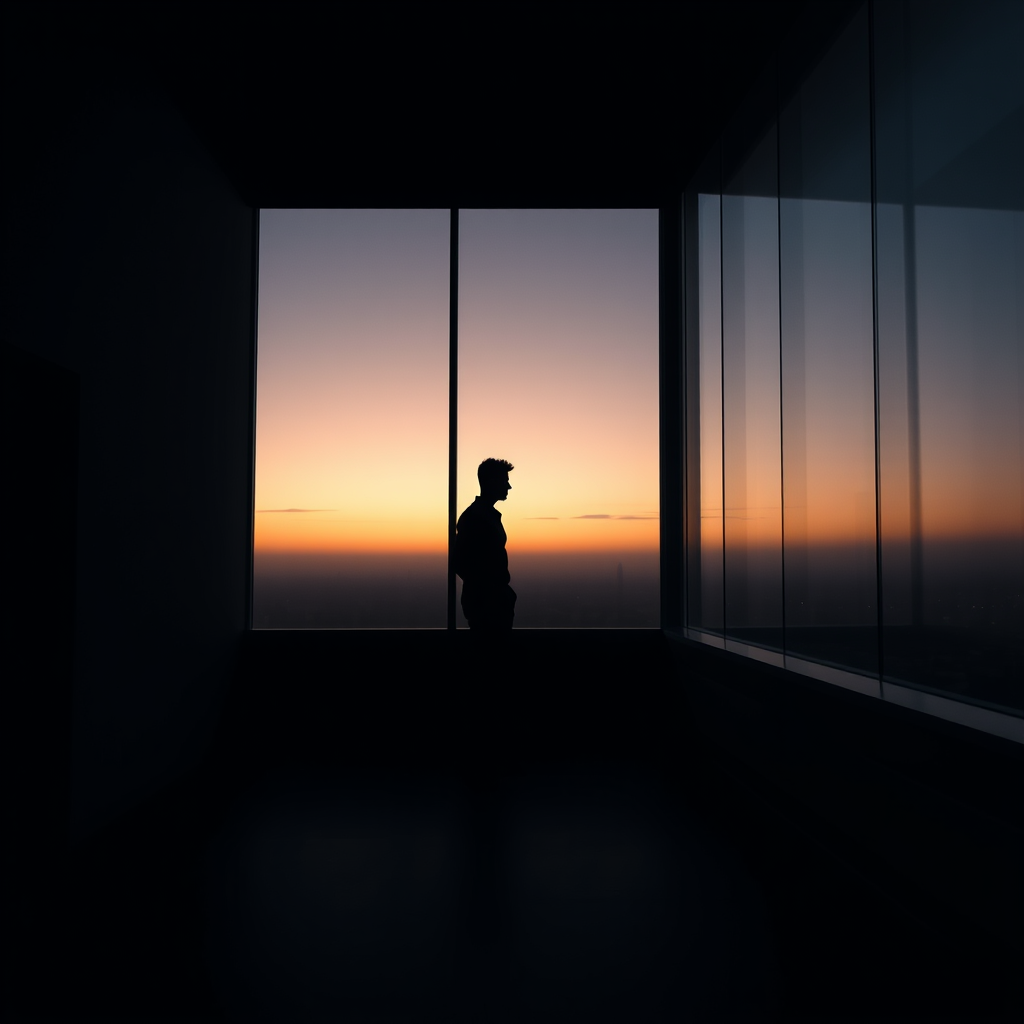
The Architecture of Restraint and the Weight of Unspoken Authority
In the modern high-rise, the male penthouse has evolved into a sanctuary of calculated austerity, where the aesthetic of the void reigns supreme. Here, the interplay of deep shadows and cold, muted tones is not merely a design choice but a reflection of a profound psychological state. This environment demands a specific kind of discipline, one that echoes the historical rigidity of the Puritan tradition, transposed into the glass-and-steel reality of contemporary power. To inhabit such a space is to embrace a life defined by silence, where every object is curated to project an image of absolute control and unwavering focus. The architecture itself serves as a silent witness to the heavy burden of maintaining influence in a world that never stops clamoring for attention.
The Aesthetic of the Void
The visual language of the modern penthouse is defined by its rejection of excess, favoring a palette of slate, charcoal, and obsidian that swallows the light. This minimalist interior design philosophy creates a vacuum that forces the occupant to confront their own thoughts without the distraction of ornamentation. By stripping away the superfluous, the space becomes a theater for the mind, where the absence of color acts as a canvas for strategic contemplation. It is a deliberate choice to live within the shadows, as the darkness provides a necessary buffer against the chaotic noise of the external political landscape.
This aesthetic is deeply rooted in the concept of the monastic cell, updated for the elite who wield significant influence over global affairs. When one surrounds oneself with muted tones, the environment ceases to be a mere living space and transforms into a tool for cognitive regulation. The coldness of the materials—polished concrete, brushed steel, and dark marble—serves as a constant reminder of the political power that must be wielded with a steady, unyielding hand. It is a environment that demands a high level of self-regulation, mirroring the historical discipline found in the writings of Puritan thinkers who viewed the world as a place of constant trial and necessary restraint.
The Puritanical Discipline of Power
There is a striking parallel between the historical Puritan commitment to austerity and the modern executive’s need for a controlled environment. Just as the early settlers sought to purge their lives of vanity to better serve their vision of a higher order, the modern power broker utilizes the silence of the penthouse to sharpen their strategic edge. This disciplined lifestyle is not about deprivation, but about the intentional removal of friction. Every decision made within these walls is filtered through a lens of necessity, ensuring that no energy is wasted on the trivial or the fleeting.
Maintaining this level of focus requires a psychological fortitude that is often misunderstood by those outside the inner circle. The silence of the penthouse is not empty; it is heavy with the weight of decisions that affect thousands, if not millions, of lives. This is where the shadows of the Puritan manifest most clearly, as the occupant adopts a posture of constant vigilance and moral gravity. By embracing a life of quietude, the individual creates a fortress of the mind, ensuring that their internal compass remains true even when the pressures of the outside world threaten to pull them off course.
The Architecture of Silence
Silence in the penthouse is a curated commodity, a luxury that is becoming increasingly rare in our hyper-connected society. The structural integrity of these high-altitude dwellings is designed to dampen the roar of the city, creating an acoustic vacuum that amplifies the internal monologue. This silence is the ultimate tool for the strategist, allowing for the deep, uninterrupted thought required to navigate complex political and economic landscapes. It is within this stillness that the most significant shifts in power are often conceived and refined.
To exist in such a space is to participate in a ritual of isolation that is both empowering and isolating. The architectural design of these spaces often emphasizes verticality and transparency, yet the interior remains a bastion of privacy. This paradox is essential to the maintenance of authority; one must be able to see the world clearly while remaining obscured from its view. The shadows cast by the setting sun across a minimalist living room are not just aesthetic elements; they are the boundaries of a private kingdom where the rules of the outside world are suspended in favor of a more rigorous, self-imposed code of conduct.
The Intersection of Light and Shadow
The interplay between the harsh, unfiltered light of the high-altitude sun and the deep, impenetrable shadows of the interior creates a dynamic tension that defines the occupant’s daily experience. This contrast is a physical manifestation of the duality inherent in leadership: the need to be visible and decisive while simultaneously maintaining a core of impenetrable mystery. The muted color palette serves to bridge this gap, softening the transition between the blinding clarity of the exterior view and the contemplative darkness of the interior sanctuary.
This environment forces a confrontation with the self that is rarely experienced in more conventional settings. When the world is reduced to shades of gray and black, the occupant is compelled to focus on the essence of their actions and the long-term consequences of their influence. It is a space that demands honesty, as there is nowhere to hide from the stark reality of one’s own ambitions. For further exploration on how environment shapes the human psyche, one might look into the principles of architectural psychology, which examines the profound impact of our surroundings on our cognitive processes and emotional well-being.
Final Thoughts
The male penthouse, with its deep shadows and cold, muted tones, stands as a testament to the enduring power of restraint. It is a space that honors the legacy of the Puritan tradition by elevating discipline and silence to the status of high art. In a world that is increasingly loud and chaotic, the ability to retreat into a controlled, minimalist environment is perhaps the ultimate expression of modern authority. By embracing the silence, the occupant does not merely survive the pressures of power; they master them, finding clarity in the shadows and strength in the void.