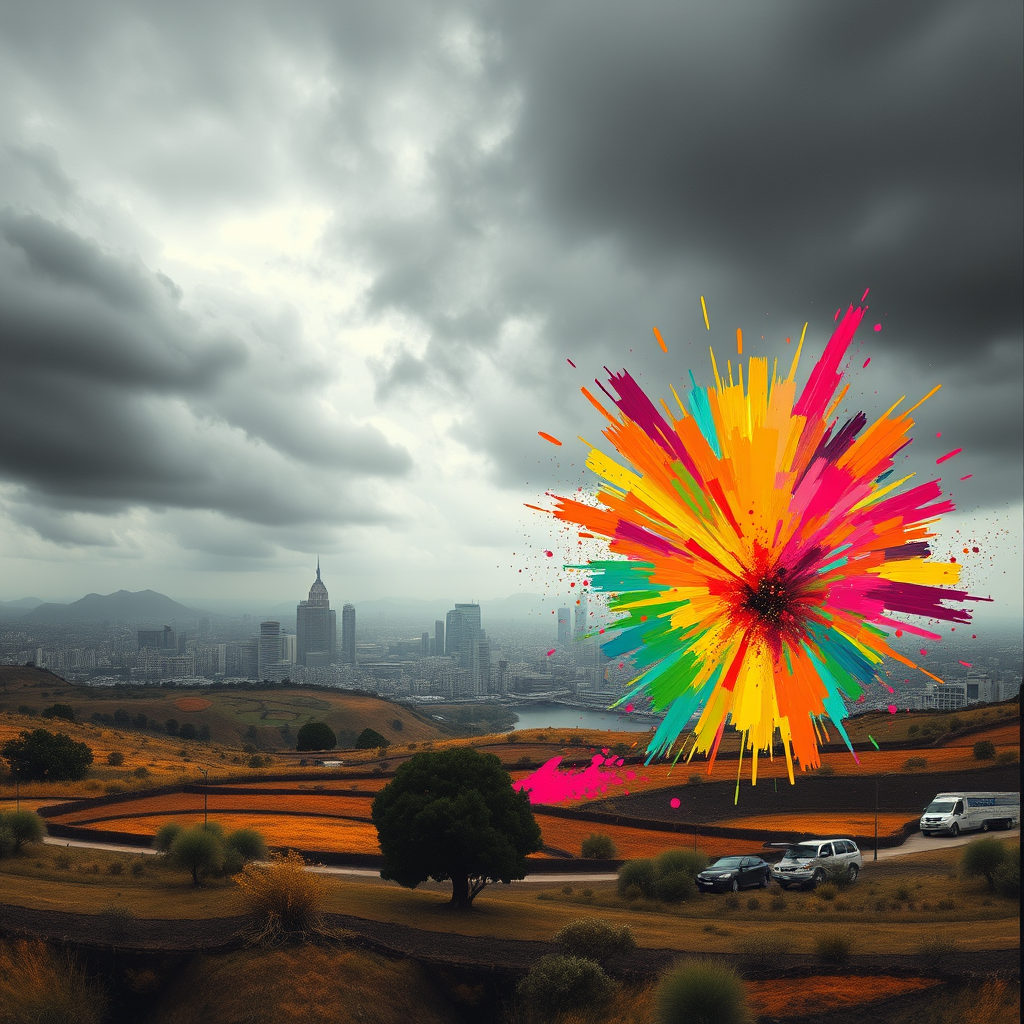
Tag: colour

  • The Cultural Impact of Orange Air and Digital Devices

    The Cultural Impact of Orange Air and Digital Devices

    The Chromatic Shift of Our Modern Digital Landscape

    When the sky turns a haunting, unnatural shade of amber, it does more than just signal an environmental crisis; it fundamentally alters our perception of the tools we hold in our hands. This phenomenon of orange air, often born from wildfires or extreme atmospheric pollution, creates a surreal, cinematic filter that forces us to view our smartphones and tablets through a new, distorted lens. As we scroll through feeds while standing under a sepia-toned horizon, the contrast between the vibrant, artificial glow of our screens and the apocalyptic hue of the outside world becomes impossible to ignore. This visual dissonance serves as a powerful metaphor for the digital transformation of our daily lives, highlighting how our reliance on technology often blinds us to the shifting reality of the physical environment around us.

    The Psychology of the Amber Glow

    The color orange is historically associated with energy, warmth, and caution, but in the context of an atmospheric event, it triggers a primal sense of unease. When this specific light interacts with the blue-light emissions of our digital devices, it creates a unique sensory experience that can heighten anxiety and alter our cognitive processing. We are no longer just looking at a screen; we are looking at a portal that feels increasingly disconnected from the reality of the air we breathe. This psychological friction is a hallmark of the technological impact on human behavior, where the boundary between the virtual and the physical becomes blurred by the very light that illuminates our interactions.

    Research into color psychology suggests that our brains react to these shifts in ambient light by adjusting our focus and emotional state. When the environment is bathed in orange, our devices seem to take on a more intrusive quality, demanding attention even as the world outside signals a need for vigilance. This creates a feedback loop where we retreat further into our digital bubbles to escape the discomfort of the physical world, only to find that the digital world is equally saturated with the same unsettling aesthetic. By understanding how light influences our mood, we can better appreciate why the orange sky feels like a digital filter brought to life, forcing us to confront the artificiality of our constant connectivity.

    Digital Devices as Modern Anchors

    In times of crisis, our smartphones become our primary source of information, acting as anchors in a sea of uncertainty. When the air turns orange, we instinctively reach for our devices to check air quality reports, track fire maps, and communicate with loved ones. This reliance on mobile connectivity demonstrates how deeply embedded these tools are in our survival strategies, even when the crisis is environmental rather than digital. We trust the data on our screens more than the evidence of our own eyes, allowing the digital interface to dictate our level of panic or calm.

    However, this reliance comes at a cost, as the constant stream of notifications and updates can exacerbate the stress caused by the atmospheric conditions. The orange light reflecting off our screens creates a visual feedback loop that reinforces the sense of an ongoing emergency, making it difficult to disconnect or find mental clarity. We are effectively tethered to a digital ecosystem that thrives on urgency, which is amplified when the physical world mirrors that same sense of alarm. To learn more about how environmental factors influence our digital habits, you can explore the research provided by Pew Research Center on technology and human behavior.

    The Aesthetic of the Apocalypse

    There is a strange, undeniable beauty in the way orange light interacts with the sleek, metallic surfaces of our modern devices. This aesthetic has been captured in countless photographs and social media posts, turning a genuine environmental disaster into a viral visual trend. This transformation of the apocalyptic into the aesthetic is a testament to our culture of digital consumption, where even the most dire situations are packaged for engagement and shareability. We have become so accustomed to viewing the world through a screen that we instinctively look for the best angle, even when the sky is falling.

    This tendency to aestheticize the environment reflects a broader cultural shift toward prioritizing the digital representation of an event over the event itself. When we share images of the orange sky, we are not just documenting a phenomenon; we are participating in a collective performance of awareness that is mediated by our devices. This process strips the event of its visceral, terrifying reality and replaces it with a curated, shareable version that fits neatly into our digital feeds. For further reading on how digital media shapes our perception of reality, consider the insights available at The Atlantic regarding modern media consumption.

    Reclaiming Our Relationship with Technology

    To navigate this new reality, we must become more intentional about how and when we use our devices during periods of environmental stress. Recognizing that the orange light is a metaphor for our digital saturation allows us to step back and evaluate our dependency on constant updates. By setting boundaries and prioritizing physical presence, we can mitigate the anxiety that comes from being perpetually plugged into a digital world that is constantly reflecting the chaos of the outside environment. It is about finding a balance where technology serves as a tool for information rather than a source of constant, low-level dread.

    Ultimately, the orange air serves as a wake-up call to the fragility of both our environment and our digital habits. We must learn to look up from our screens and engage with the world directly, even when the view is unsettling or difficult to process. By fostering a more conscious approach to our digital lives, we can ensure that our devices remain helpful companions rather than filters that distort our understanding of the world. This shift in perspective is essential for maintaining our mental health and our connection to the physical reality that sustains us, regardless of the color of the sky.

    Final Thoughts

    The intersection of environmental change and digital interaction is a defining feature of our contemporary existence. As we continue to navigate a world where the atmosphere itself can shift our perception, the role of our devices will only become more complex and influential. By remaining aware of how these tools shape our experiences, we can maintain a sense of agency and clarity in an increasingly unpredictable world. We must strive to be more than just passive consumers of digital content, choosing instead to be active participants in the physical world that surrounds us. Ultimately, the orange sky is a reminder that while our digital devices are powerful, they are no substitute for the raw, unfiltered experience of living in the real world.

  • The Bihari Titans: A Creative Victory Against Digital Orphans

    The Bihari Titans: A Creative Victory Against Digital Orphans

    How the raw energy of Bihar is reclaiming the digital landscape from the shadows of obscurity

    In the vast, sprawling expanse of the internet, there exists a graveyard of forgotten projects, abandoned websites, and lost creative endeavors known as digital orphans. These remnants of human effort often languish in the dark, satanic imagery of neglect, where broken links and decaying code serve as tombstones for ideas that never found their audience. However, a new wave of creators emerging from the heart of Bihar is challenging this narrative of obsolescence with a radical, visual defiance. By utilizing a palette of bold, saturated colors, these Bihari titans are not merely decorating their work; they are actively bridging the gap between the void of digital abandonment and the triumphant, vibrant victory of the human spirit. This movement represents a profound shift in how we perceive the longevity of online content, proving that even the most overlooked corners of the web can be revitalized through intentional, high-contrast design.

    The Aesthetics of Defiance

    The visual language adopted by these creators is far from accidental, as it serves as a direct counter-offensive against the sterile, minimalist trends that currently dominate the global web. By embracing intense, saturated hues, they create a sensory experience that demands attention, effectively pulling the viewer out of the passive scrolling state. This vibrant design philosophy acts as a beacon, signaling that the content is alive, relevant, and deeply rooted in a cultural identity that refuses to be erased by the algorithms of indifference. The deliberate use of color is a psychological tool, designed to disrupt the monotony of the digital landscape and force an engagement that is both visceral and immediate.

    When we look at the history of digital neglect, we often see a lack of personality, a graying of the creative soul that makes content easy to discard. The Bihari titans reject this grayness entirely, opting instead for a spectrum that reflects the chaotic, beautiful, and relentless energy of their home region. This approach is not just about aesthetics; it is a form of digital reclamation that asserts the presence of the creator in a space that was never built to accommodate them. By saturating their platforms with life, they ensure that their work cannot be easily categorized as a digital orphan, as it possesses a pulse that is impossible to ignore. You can learn more about the psychology of color in design by visiting Interaction Design Foundation to understand how these choices impact user perception.

    Confronting the Satanic Imagery of Neglect

    Digital neglect often manifests as a form of aesthetic decay, where the lack of maintenance and the absence of human touch create a haunting, hollow environment. This is the realm of the digital orphan, a place where broken interfaces and outdated layouts create a sense of unease, much like the dark, satanic imagery found in gothic literature or abandoned industrial sites. The Bihari titans recognize this darkness not as a finality, but as a canvas upon which they can project their own light. They understand that to defeat the void, one must fill it with something so undeniably potent that the shadows are forced to retreat.

    This process of transformation is inherently political, as it challenges the hegemony of Western-centric design standards that often dictate what is considered professional or worthy of visibility. By infusing their work with the bold, saturated colors of their heritage, these creators are engaging in a cultural assertion that transcends the limitations of their digital environment. They are effectively exorcising the demons of neglect by replacing them with symbols of vitality and resilience. This struggle against the void is documented in various studies on digital preservation, which you can explore further at The Library of Congress Digital Preservation site to see how global efforts are attempting to save the history of the web.

    The Psychology of Saturated Victory

    Why does color have such a profound impact on our perception of digital survival? The answer lies in the way our brains process high-contrast stimuli, which are often associated with life, danger, and excitement in the natural world. When a creator uses bold, saturated colors, they are tapping into a primal response that overrides the numbness caused by the endless stream of mediocre content. This is the creative victory that the Bihari titans achieve; they bypass the logical filters of the viewer and speak directly to their emotional core, ensuring that the message is felt before it is even read.

    This victory is not just about individual success; it is about building a collective identity that can withstand the pressures of the digital age. By creating a visual language that is distinct and unapologetic, these creators are building a community that shares a common aesthetic and a common goal. They are proving that the digital orphan is not a permanent state, but a temporary condition that can be reversed with enough passion and color. This movement is a testament to the power of human agency in an era where we are often told that the machine is in control of our creative output.

    Bridging the Gap Between Eras

    The transition from a state of digital neglect to one of vibrant victory requires a bridge, and for these creators, that bridge is built on the foundation of bold, saturated colors. This bridge connects the past, where their work might have been ignored or forgotten, to a future where it is celebrated and preserved. It is a bridge that spans the divide between the local and the global, allowing the unique voice of Bihar to be heard on a worldwide stage. This visual bridge is essential for any creator who feels that their work is being lost in the shuffle of the modern internet.

    As we look toward the future, the lessons provided by these titans will become increasingly important for anyone working in the digital space. We are moving toward a time where the sheer volume of content will make it harder than ever to stand out, and the only way to survive will be to embrace the bold, the bright, and the authentic. The Bihari titans are leading the way, showing us that the path to victory is paved with the colors of our own identity. Their work serves as a reminder that we are not just users of the web, but architects of its future, capable of turning even the darkest corners into beacons of light.

    Final Thoughts

    The story of the Bihari titans is a powerful reminder that the digital world is not a static entity, but a living, breathing space that reflects the people who inhabit it. By choosing to fight the darkness of digital neglect with the weapon of bold, saturated color, they have proven that the human spirit is capable of overcoming even the most daunting obstacles. Their journey from the shadows to the spotlight is a blueprint for any creator who feels lost in the vastness of the internet. We must continue to support and learn from these pioneers, as they are the ones who will ultimately define the next chapter of our digital history. Through their triumphant spirit, they have shown us that even the most forgotten projects can find a new life if we are willing to paint them with the colors of our own truth.

  • Supreme Power: Black Female Excellence in the Violet Marathon

    Supreme Power: Black Female Excellence in the Violet Marathon

    Beyond the Finish Line: Redefining the Marathon of Modern Existence

    The marathon of life is rarely a linear path, especially for Black women who navigate the complex intersections of systemic barriers and personal ambition. When we visualize this journey through the lens of violet, we are not merely looking at a color, but at a profound synthesis of royalty, spiritual depth, and unyielding power. This hue represents the convergence of the calm, steady blue of endurance and the fiery, passionate red of revolutionary action. For Black women, excellence is not a destination reached after a single race, but a continuous state of being that demands resilience, grace, and an unwavering commitment to self-actualization. By framing the Black female experience as a supreme force, we acknowledge that every step taken in the face of adversity is a testament to a legacy of strength that spans generations.

    The Royal Hue of Resilience

    Violet has historically been associated with the elite, the regal, and the divine, yet its application to the Black female experience serves as a reclamation of space. In a society that often attempts to diminish the brilliance of Black women, choosing to wear the mantle of violet is an act of radical self-assertion. It signifies that one does not need permission to occupy the throne of their own life, nor do they need validation to recognize their inherent worth. This Black female excellence is not defined by external accolades or the approval of institutions, but by the internal fortitude required to thrive in environments that were never designed for their success.

    When we examine the history of Black women in leadership, we see a consistent thread of regal composure maintained under immense pressure. Whether in the boardroom, the laboratory, or the community center, the ability to lead with both empathy and authority is a hallmark of this excellence. By embracing the symbolism of violet, Black women are signaling that their presence is not just a contribution, but a command of the space they inhabit. This is the essence of royalty in the modern age, where the crown is forged through the fires of experience and the velvet of wisdom. You can learn more about the historical significance of color and power through resources like Britannica’s guide to the history of purple, which highlights how this color has long been a marker of status and influence.

    Navigating the Marathon of Societal Paradigms

    The marathon metaphor is particularly apt because it implies a long-distance commitment that requires pacing, strategy, and mental toughness. Black women are often expected to run this race at a sprint, constantly proving their value while managing the weight of societal expectations. However, the true power lies in the ability to set one’s own pace and define the parameters of the race itself. This involves a strategic navigation of professional and personal landscapes, where the goal is not just to finish, but to finish with one’s integrity and spirit intact. It is about recognizing that the marathon is not against others, but a journey of continuous evolution.

    To sustain this level of performance, one must cultivate a deep sense of community and mentorship. No one runs a marathon in total isolation, and the most successful Black women are those who build networks of support that uplift and sustain them. By sharing knowledge, resources, and encouragement, these women create a collective power dynamic that challenges the status quo and paves the way for future generations. This collaborative approach is essential for dismantling the barriers that seek to isolate and exhaust, ensuring that the marathon remains a sustainable pursuit for all who follow. For further inspiration on the importance of community in professional growth, consider reading insights from Harvard Business Review on the power of the Black female network.

    The Intersection of Spirituality and Strategy

    The violet spectrum is often linked to the crown chakra, representing a connection to higher consciousness and intuitive wisdom. For many Black women, this spiritual grounding is the secret weapon that allows them to remain centered amidst the chaos of modern life. It is the ability to listen to one’s inner voice, even when the external world is screaming for conformity. This intuitive strategy is what allows for the pivot, the breakthrough, and the innovation that defines true excellence. It is a recognition that the mind and the spirit must work in tandem to achieve lasting impact.

    Strategic thinking, when paired with this spiritual depth, becomes an unstoppable force. It allows for the anticipation of obstacles and the creative problem-solving required to overcome them. When a Black woman approaches her career or her creative endeavors with this dual focus, she is not just reacting to her environment; she is actively shaping it. This is the manifestation of supreme power, where the internal state dictates the external reality. By prioritizing mental and spiritual well-being, one ensures that the marathon is not just a test of endurance, but a journey of profound personal discovery and growth.

    Sustaining the Momentum of Excellence

    Maintaining excellence over the long term requires a commitment to rest, reflection, and rejuvenation. The marathon is not won by those who burn out, but by those who understand the necessity of recovery. In a culture that glorifies the grind, choosing to prioritize one’s health and peace is a revolutionary act. It is a declaration that the vessel of one’s talent is just as important as the output itself. By integrating periods of stillness into the race, Black women can ensure that their brilliance continues to shine brightly, undimmed by the fatigue of the journey.

    Furthermore, the legacy of this excellence is found in the stories we tell and the paths we clear for others. Every Black woman who reaches a milestone is a beacon for those coming up behind her, proving that the marathon is winnable and that the finish line is worth the effort. This transformative leadership is about more than just personal success; it is about shifting the culture so that the next generation does not have to run as hard to achieve the same results. By documenting these journeys and celebrating these wins, we solidify the place of Black women in the annals of history as the architects of their own destiny. For more on the importance of self-care as a form of resistance, explore the work of Audre Lorde, whose writings continue to inspire generations of women to prioritize their own well-being.

    Final Thoughts

    The journey of the Black woman is a marathon of unparalleled significance, characterized by a unique blend of grace, grit, and regal power. By embracing the symbolism of violet, we acknowledge the depth of this experience and the supreme nature of the excellence it produces. As we continue to navigate the complexities of modern society, let us remember that our power is not something to be earned, but something to be claimed and cultivated. The marathon continues, but with every step, we redefine what it means to be a force of nature, a leader, and a visionary. May we all continue to run with purpose, supported by the strength of our ancestors and the promise of our own limitless potential.

  • The Yellow Water Mission: Financial Rewards and Cultural Legacy

    The Yellow Water Mission: Financial Rewards and Cultural Legacy

    Navigating the Murky Currents of Ambition and Heritage

    The Yellow Water Mission stands as a haunting testament to the duality of human endeavor, where the pursuit of prosperity often clashes with the preservation of ancestral roots. For the figures of Morgan and Yamaguchi, the mission was never merely about the extraction of resources or the accumulation of wealth; it was a complex dance between their personal identities and the unforgiving landscape they sought to conquer. The water itself, thick with sediment and history, acts as a visual metaphor for the obscured path they walked, blending the promise of financial gain with the weight of cultural legacy. As we peel back the layers of this historical narrative, we find that the true cost of their journey was measured not just in currency, but in the erosion of the very traditions they claimed to uphold. This exploration delves into how these two disparate forces—the drive for financial rewards and the preservation of cultural identity—collided in a way that forever altered the trajectory of their mission.

    The Genesis of the Morgan and Yamaguchi Partnership

    The partnership between Morgan and Yamaguchi was forged in the fires of necessity and the shared vision of untapped potential. Morgan, a pragmatic strategist with an eye for market fluctuations, saw the region as a goldmine waiting to be tapped, while Yamaguchi brought a deep, intuitive understanding of the local customs that governed the land. Their collaboration was built on the premise that cultural identity could be leveraged as a tool for navigation, allowing them to bypass the obstacles that had thwarted previous explorers. By integrating local knowledge with modern industrial techniques, they hoped to create a blueprint for success that would be both profitable and sustainable. However, the initial optimism of their venture was quickly tempered by the reality of the environment, which demanded more than just technical expertise to survive.

    As they ventured deeper into the territory, the lines between their professional objectives and their personal values began to blur. Morgan was focused on the bottom line, constantly calculating the potential returns on their investment, while Yamaguchi found himself increasingly drawn to the stories and rituals of the people who lived along the riverbanks. This tension became the defining characteristic of their mission, creating a friction that would eventually lead to a profound internal crisis. They were not just mapping a landscape; they were navigating the complex moral geography of exploitation versus stewardship. The Yellow Water became a constant reminder of the murky nature of their goals, reflecting the sediment of their own conflicting desires and the long-term consequences of their actions.

    The Visual Metaphor of the Yellow Water

    The river, with its distinctive, opaque hue, served as a powerful symbol for the ambiguity that defined the mission. To the local population, the water was a life-giving force, a sacred entity that carried the history of their ancestors through the silt and clay. To Morgan and Yamaguchi, however, the water was an obstacle to be overcome, a barrier that hid the riches they were desperate to uncover. This fundamental difference in perception highlights the core conflict of the mission: the struggle between seeing the land as a commodity and seeing it as a living, breathing heritage. The visual metaphor of the yellow water suggests that when we prioritize profit over people, we lose the ability to see the clarity of our own moral compass.

    Throughout their journals, both men frequently referenced the river, though in vastly different ways. Morgan wrote of the river as a logistical challenge, a force that needed to be tamed and channeled to facilitate the transport of their findings. Yamaguchi, conversely, wrote of the river as a mirror, reflecting the faces of those who had come before and the ghosts of the traditions that were being slowly dismantled by their presence. This divergence in their perspectives is documented extensively in historical archives, such as those found at The Library of Congress, which provide a window into the era of industrial expansion. The river did not just flow; it challenged them to reconcile their ambition with the reality of the cultural landscape they were irrevocably changing.

    The Cost of Progress and the Erosion of Tradition

    As the mission progressed, the financial rewards began to materialize, but they came at a steep price. The infrastructure required to extract resources disrupted the natural flow of the river and, by extension, the social fabric of the communities that relied on it. Morgan argued that the economic benefits would eventually lift the region out of poverty, providing jobs and modern amenities that were previously unavailable. Yet, Yamaguchi observed that the influx of wealth was destroying the traditional social structures that had kept these communities resilient for centuries. The economic impact of their work was undeniable, but it was an impact that left the cultural foundations of the region fractured and unstable.

    The tension reached a breaking point when the local elders confronted the pair, demanding that they respect the sanctity of the river and the land surrounding it. This confrontation forced Morgan and Yamaguchi to confront the reality that their pursuit of wealth was directly contributing to the erasure of a unique cultural legacy. They were faced with a choice: continue their path of extraction and risk the total alienation of the local population, or pivot their strategy to incorporate a more sustainable, respectful approach. This moment of reckoning is a classic example of the ethical dilemmas faced by many historical figures who sought to bridge the gap between industrial progress and indigenous rights, a topic explored in depth at Smithsonian Magazine. The legacy of their mission is not found in the gold they extracted, but in the lessons learned about the fragility of cultural heritage in the face of unchecked ambition.

    Reconciling Ambition with Ethical Stewardship

    In the final stages of the mission, the partnership began to dissolve under the weight of their differing priorities. Morgan remained committed to the financial success of the venture, viewing the cultural concerns as secondary to the primary goal of profitability. Yamaguchi, however, had undergone a transformation, realizing that the true value of the mission lay in the preservation of the stories and traditions he had encountered. He began to document the history of the region, creating a record that would outlive the temporary wealth generated by their industrial activities. This shift in focus allowed him to find a sense of purpose that transcended the simple accumulation of capital, even as it alienated him from his partner.

    The legacy of the Yellow Water Mission is a cautionary tale for modern entrepreneurs and explorers alike. It serves as a reminder that the pursuit of financial rewards must always be balanced with a deep respect for the cultural and environmental contexts in which we operate. When we ignore the human element of our work, we risk creating a legacy that is defined by what we destroyed rather than what we built. The story of Morgan and Yamaguchi is not just a historical footnote; it is a reflection of the ongoing struggle to find harmony between progress and preservation. By examining their journey, we can better understand the importance of ethical stewardship in our own professional and personal lives, ensuring that our ambitions do not come at the expense of the world around us.

    Final Thoughts

    The Yellow Water Mission remains a poignant example of how the intersection of ambition and heritage can shape the course of history. While the financial gains were significant, the true impact of the mission was felt in the cultural shifts that occurred as a result of their presence. We must learn to navigate the murky waters of our own ambitions with a clear understanding of the legacy we are creating for future generations. By prioritizing ethical considerations and respecting the cultural identities of the communities we interact with, we can ensure that our work leaves a positive and lasting mark on the world. For further reading on the intersection of history and industry, one might consult resources like History.com to see how similar missions have played out across the globe. Ultimately, the story of Morgan and Yamaguchi teaches us that the most valuable rewards are not always found in the ledger, but in the preservation of the human spirit and the traditions that define us.

  • Shifting Power Paradigms: Air, Culture, and Dull Hues

    Shifting Power Paradigms: Air, Culture, and Dull Hues

    The Invisible Architecture of Influence: When Grey Becomes the New Gold

    We stand at a fascinating precipice in the ongoing evolution of influence, where the very atmosphere we breathe—the air of cultural discourse—is being subtly re-tinted. For too long, power structures were defined by overt displays of wealth and vibrant, almost aggressive, color palettes designed to command attention. Yet, a profound shift is underway, moving the locus of control into the muted, the understated, and the seemingly innocuous. This transition is not merely aesthetic; it represents a fundamental recalibration of how authority is perceived, asserted, and ultimately, maintained in the digital age. Understanding this movement from the loud to the low-key is crucial for anyone navigating the contemporary landscape of societal change.

    The Subtlety of Atmospheric Control

    The concept of ‘air’ here is not just the literal medium of transmission, but the prevailing mood, the accepted background noise against which all action takes place. When the air is thick with established norms, challenging those norms requires a burst of vibrant, disruptive color—a clear signal of rebellion or innovation. However, when the air itself becomes saturated with a uniform, almost imperceptible hue, the power dynamic shifts toward those who control the filtration system. They dictate what is breathable, what is acceptable to inhale, and what must be filtered out as noise or toxicity. This control is often invisible, woven into the very fabric of accepted reality, making it incredibly difficult to pinpoint the source of the constraint.

    Consider the evolution of corporate branding, for example. Early 20th-century industry favored deep reds and bold blacks, signaling dominance and unwavering strength. Today, many of the most powerful entities favor minimalist designs, muted palettes, and an emphasis on ‘transparency’ that often masks deeper opacity. This deliberate choice of dull hues is a strategic move, suggesting stability and maturity, implying that they no longer need to shout to be heard. They have achieved a level of systemic integration where their presence is assumed, much like the air itself. This quiet dominance is a hallmark of modern hegemonic structures.

    The cultural implications of this atmospheric shift are vast. When the dominant cultural narrative adopts a palette of beige and grey, it subtly discourages the expression of radical difference. Vibrant, clashing colors become associated with amateurism or instability, while the dull, the predictable, becomes the benchmark for professionalism and trustworthiness. This creates a self-reinforcing loop where deviation from the established visual and conceptual norm is penalized, not through censorship, but through social and professional marginalization. For deeper insights into how visual language shapes perception, one might explore the semiotics of color in modern media.

    Cultural Inertia and the Beige Consensus

    Culture, in this context, is the shared set of assumptions that govern behavior and interpretation. When the dominant culture settles into a state of low-saturation existence, it fosters a powerful cultural inertia. This inertia is the resistance to movement, the tendency for things to remain as they are, even when they are demonstrably suboptimal or unjust. The dull hues act as a visual anesthetic, numbing the collective desire for dramatic overhaul. Why rock the boat when the boat, though perhaps slightly faded, is still afloat and everyone else seems content with the gentle rocking motion?

    This consensus is often manufactured through the careful curation of information streams. If the news cycle, the entertainment industry, and the professional sphere all operate within a narrow band of acceptable discourse—a band painted in shades of corporate grey—then any truly colorful idea appears jarring, out of place, and therefore, untrustworthy. This is where the power paradigm truly solidifies: not by banning the bright colors, but by making them socially and professionally unviable. We see this reflected in the increasing homogenization of architectural styles across global cities, favoring functional, unadventurous designs over local, vibrant expressions. Architecture Daily often showcases this trend toward globalized minimalism.

    The challenge for innovators and dissidents, therefore, is not just to create something new, but to create something that can successfully penetrate this dense, low-contrast environment without being immediately dismissed as noise. They must learn the language of the muted tones while simultaneously injecting potent, yet carefully disguised, elements of vibrancy. This requires a mastery of strategic ambiguity, a skill set far more complex than simple, loud opposition. It demands an understanding of the underlying currents of the air itself.

    The Aesthetics of Power: From Spectacle to Subtlety

    Historically, power was spectacle. Think of royal courts, military parades, or the overwhelming scale of industrial factories—all designed to impress through sheer, undeniable presence. The shift to dull hues signifies a move away from spectacle toward systemic embedding. Modern power doesn’t need to impress; it needs to be assumed. This subtlety is far more insidious because it bypasses critical faculties that are primed to detect overt threats or displays of arrogance.

    When everything looks vaguely similar—when the interfaces are clean, the language is sanitized, and the visual environment is consistently low-key—the individual’s cognitive load is reduced, allowing them to accept the status quo without deep scrutiny. This is the triumph of the background process. The dull hue is the ultimate camouflage for entrenched interests. It suggests efficiency, seriousness, and a lack of frivolous distraction, qualities highly valued in contemporary professional settings. This aesthetic choice is a direct reflection of the contemporary business ethos.

    Furthermore, the embrace of ‘dullness’ allows those in power to deflect accusations of elitism or detachment. A vibrant, expensive display screams privilege; a muted, minimalist aesthetic can be marketed as responsible, sustainable, or even ‘authentic.’ This manufactured authenticity, draped in grey, is a powerful tool for maintaining distance while appearing relatable. To explore the psychological impact of minimalist design, resources on cognitive load theory can be highly illuminating.

    Breathing New Color into the System

    If the current paradigm favors the muted and the systemic, how does one introduce meaningful, lasting color without being immediately washed out? The answer lies in leveraging the very medium that carries the dullness: the air of culture. True disruption today often comes not from a single, massive explosion of color, but from the strategic introduction of highly concentrated, localized bursts of vibrancy that resonate deeply within specific cultural niches before spreading organically.

    This requires an understanding of cultural vectors—the pathways through which ideas and aesthetics travel. A single, perfectly rendered piece of art, a perfectly articulated counter-narrative, or a genuinely novel social structure, even if initially presented in a muted wrapper, can carry an internal luminescence that eventually breaks through the surface dullness. This is the difference between superficial style and deep substance; the latter possesses an inherent light source. The concept of ‘memetic viability’ plays a huge role here, determining which ideas can successfully propagate across these low-contrast environments. Wired Magazine frequently covers the mechanics of idea propagation.

    The key is to avoid direct confrontation with the established dullness on its own terms. Instead of fighting grey with primary colors, one must introduce a new, unexpected shade that the current filtering system hasn’t been programmed to recognize as a threat or an anomaly. This might involve blending cultural references in novel ways, utilizing forgotten or marginalized aesthetic traditions, or employing humor and irony—tools that thrive in the cracks of overly serious, muted systems. The goal is to create a new, compelling frequency within the existing airwaves, forcing a perceptual shift in the audience. This strategic re-coloring is the new frontier of political engagement.

    The Future Hue: Navigating the Spectrum of Power

    The transition we are witnessing is a maturation of power dynamics. Overt displays are increasingly seen as gauche or inefficient; true control is exercised through the subtle management of expectation and atmosphere. The dull hues are not a sign of weakness, but a sign of absolute confidence in the system’s ability to absorb and neutralize anything too bright or too challenging. Recognizing this is the first step toward effective navigation. We must become adept at reading the negative space, the implied meanings behind the lack of color.

    For creators, activists, and thinkers, the mandate is clear: master the language of the current environment while cultivating an internal, unquenchable source of unique energy. This requires deep study of cultural anthropology and media theory to understand precisely how the air is being conditioned. We must look beyond the surface presentation to identify the underlying structural choices that favor the muted over the magnificent. This intellectual rigor is essential for maintaining intellectual autonomy in a visually homogenized world. For a historical perspective on how aesthetics have mirrored power shifts, reading about the Baroque versus Neoclassical periods offers fascinating parallels.

    Ultimately, the shifting power paradigms are less about who holds the loudest megaphone and more about who controls the ambient light. The dull hues are a temporary state, a phase of consolidation. But the human spirit, and the cultural impulse toward expression, cannot be permanently muted. The next great wave of change will likely be heralded by the introduction of a color so unexpected, so perfectly calibrated to the current atmospheric pressure, that it will instantly redefine the entire spectrum. We are waiting for that catalyst, that moment when the grey consensus cracks, revealing the vibrant potential beneath. Understanding the mechanics of this current quietude prepares us to recognize and amplify the inevitable return of the truly colorful, the truly disruptive, and the truly powerful. The Atlantic often provides excellent long-form analysis on these cultural trends.

    Final Thoughts

    The interplay between air, culture, and the deliberate adoption of dull hues reveals a sophisticated, almost invisible architecture of contemporary power. It challenges us to look past the obvious signals of authority and instead analyze the very medium through which those signals travel. To resist this subtle flattening of expression requires more than just loud protest; it demands a nuanced understanding of semiotics, cultural inertia, and the strategic deployment of genuine, deeply felt vibrancy. As we move forward, those who can master the art of injecting potent meaning into the low-contrast landscape will be the ones who ultimately redefine the next era of cultural influence, ensuring that the world remains a place capable of holding both the necessary structure and the necessary spectacle. NPR offers diverse perspectives on cultural shifts.

  • The Colour of Defeat: Power’s Evil Espagnol Strike

    The Colour of Defeat: Power’s Evil Espagnol Strike

    Crimson and Shadow: Deconstructing Power’s Darkest Hue

    The pursuit of absolute authority often paints the world in stark, unforgiving shades. We speak of power not merely as a political construct, but as an aesthetic, a pervasive atmosphere that clings to those who wield it without conscience. This article delves into the unsettling beauty found in the iconography of domination, specifically examining how the ‘evil’ inherent in unchecked ambition manifests visually, drawing parallels to the severe, dramatic flair often associated with historical Spanish aesthetics—the ‘espagnol’ shadow cast over ambition’s ultimate failure. The colour palette of defeat is rarely muted; it is a violent splash of crimson against the deepest, most absolute black, a visual shorthand for tyranny’s inevitable collapse. Understanding this visual language is key to recognizing the cyclical nature of hubris and downfall across epochs.

    The Scarlet Stain of Unchecked Ambition

    Red, the colour of vitality, is tragically co-opted by those seeking eternal dominion. It becomes the colour of spilled blood, the banner under which atrocities are committed in the name of order or divine right. Consider the historical courts where opulence masked profound cruelty; the heavy velvet draperies, the ceremonial robes, all served to elevate the figurehead while simultaneously absorbing the light, creating an environment where moral clarity could not survive. This deliberate use of deep, saturated colour serves to overwhelm the senses, distracting from the ethical void at the core of the regime. The tyrannical aesthetic is inherently theatrical, demanding awe rather than respect.

    This visual saturation is a form of psychological warfare, designed to impress upon the populace the sheer, unassailable force arrayed against them. When power is absolute, its presentation must be equally absolute, leaving no room for nuance or dissent. The ‘evil’ is not hidden; it is flaunted, draped in silks and gold, daring opposition to challenge its visual supremacy. We see echoes of this in the grand, often excessive, military parades of fallen empires, where the sheer scale of the display was meant to crush the spirit before a single shot was fired. For more on the psychology of authoritarian display, one might explore the works detailing imperial propaganda.

    The Espagnol Shadow: Austerity Meets Excess

    The term ‘espagnol’ here evokes a specific historical moment characterized by severe religious fervor married to vast colonial expansion—a period where moral certainty fueled ruthless exploitation. This aesthetic is defined by high contrast: the blinding white of piety set against the impenetrable black of the Inquisition’s shadow. It is a style that demands rigid adherence to form, where deviation is not just a mistake, but a mortal sin against the established order. This cultural framework provides a potent metaphor for any system built on rigid, unforgiving hierarchies.

    The inherent contradiction in this aesthetic—the simultaneous pursuit of spiritual purity and earthly conquest—is where the seeds of defeat are sown. Power built on such brittle foundations, demanding perfect performance from imperfect beings, is destined to fracture under its own strain. The elaborate, almost suffocating formality of the Spanish Golden Age court, for instance, masked deep internal rot and economic instability, proving that visual grandeur cannot sustain a political structure devoid of genuine equity. The defeat is baked into the very structure of the performance.

    Black as the Void of Accountability

    If red signifies the active violence of power, black represents the passive, consuming void where accountability vanishes. It is the colour of the cloaks worn by those who execute the will of the powerful in secret, the ink used to sign death warrants, and the ultimate destination for those who challenge the throne. In the iconography of defeat, black is the canvas upon which the red stains are most visible, emphasizing the irreversible nature of the transgression. This pervasive darkness suffocates innovation and breeds paranoia, creating an environment where even allies become potential threats.

    The strategic deployment of black in official regalia serves to dehumanize the enforcers of power, turning them into faceless extensions of the central authority. This anonymity is crucial for maintaining the illusion of omnipresence without the risk of individual failure being scrutinized. The symbolism of absolute darkness suggests an end state, a finality that the regime desperately tries to project onto its enemies, even as its own foundations crumble. Examining the visual rhetoric of totalitarian regimes reveals a consistent reliance on this stark, uncompromising visual language to enforce compliance and project eternal strength.

    The Inevitable Colour Shift: From Triumph to Ruin

    No regime, however visually imposing, can sustain the illusion of eternal triumph. The moment the machinery of power falters—a military loss, an economic collapse, or a moral awakening among the populace—the carefully curated colours begin to bleed. The vibrant, aggressive red of conquest fades into the dull, rusty brown of decay, while the imposing black begins to look less like authority and more like mourning. This shift is the true colour of defeat, a muted, sickly palette replacing the vibrant hues of hubris. The visual narrative of collapse is often far less dramatic than the rise, characterized by peeling paint and tarnished metal.

    The defeat is not just political; it is aesthetic. The grand palaces become museums of folly, their oppressive grandeur now merely historical footnotes illustrating misplaced priorities. The very symbols once revered—the banners, the crests, the ceremonial weapons—become objects of ridicule or historical curiosity, stripped of their intended menace. This final aesthetic judgment is perhaps the most enduring form of defeat, as future generations view the remnants of the regime through a lens of clear-eyed historical critique. For a fascinating look at how aesthetics shift after regime change, consider this analysis of post-revolutionary art movements The Metropolitan Museum of Art.

    The Echoes in Modern Power Structures

    While we may no longer see literal crimson cloaks, the underlying psychological manipulation remains startlingly relevant in contemporary displays of global power dynamics. Modern leaders often employ hyper-controlled media environments, utilizing specific colour grading in official broadcasts or favoring stark, minimalist architecture designed to convey unfeeling efficiency—a modern, sanitized black. The goal remains the same: to create an aura of untouchable authority that discourages questioning.

    Recognizing the historical patterns allows us to decode the contemporary signals. When political messaging relies heavily on fear, division, and the projection of overwhelming, monolithic strength, we are witnessing the modern iteration of the ‘espagnol’ shadow—the aesthetic of power that cannot tolerate internal critique. The true strength of a healthy system lies in its transparency, its willingness to embrace varied colours and shades of opinion, rather than retreating into the dangerous simplicity of absolute red and black. To resist this aesthetic trap, we must champion complexity and nuance in our public discourse. Learn more about the enduring influence of historical aesthetics on modern branding Victoria and Albert Museum.

    Final Thoughts

    The colour of defeat is ultimately the colour of truth revealed, a palette that strips away the artifice of manufactured grandeur. Whether draped in the heavy velvets of a forgotten empire or presented through the slick, high-definition imagery of a modern strongman, the underlying mechanism of oppressive power relies on a visual language designed to intimidate and silence. By understanding how the aesthetics of ‘evil’ power—the stark, unforgiving contrast of crimson and shadow—are deployed, we arm ourselves against their seductive, yet ultimately hollow, promises of order. The enduring lesson is that systems built on such rigid, fear-based visual codes are inherently fragile, destined to fade into the muted, undeniable colours of history’s judgment. Explore the philosophy behind visual persuasion in politics here: Stanford Encyclopedia of Philosophy, and see how these concepts play out in contemporary media BBC Culture.

  • Hurdle for Americans: Statehouse Photo of Indigenous Threatens Taste

    Hurdle for Americans: Statehouse Photo of Indigenous Threatens Taste

    When Marble Halls Meet Sacred Ground: The Unseen Conflict in State Capitols

    The imposing architecture of American statehouses, often built from granite and marble, symbolizes enduring governance and the perceived permanence of law. Yet, within these halls of power, a quiet, often overlooked tension exists where the rigid lines of bureaucracy meet the fluid, ancient narratives of Indigenous peoples. This juxtaposition is more than just aesthetic; it represents a fundamental clash of worldviews regarding land stewardship, sovereignty, and historical memory. When a photograph taken within these governmental strongholds captures an element of Indigenous culture—perhaps a traditional textile, a piece of regalia, or even a protest sign referencing ancestral claims—the resulting image can send unexpected ripples through the public consciousness, challenging established narratives of American history.

    For many Americans, the statehouse is a place of abstract policy and distant politics, far removed from the tangible realities of cultural survival. However, the presence of Indigenous representation, whether invited or emergent, forces a confrontation with the very foundations upon which these structures were erected. The color palette of these spaces—typically muted tones of beige, grey, and deep mahogany—stands in stark contrast to the vibrant reds, blues, and earth tones that define many Native American artistic and ceremonial traditions. This visual dissonance highlights the ongoing struggle for recognition and the difficulty mainstream society has in integrating these deeply rooted cultural expressions into the formal, often exclusionary, structures of state governance. Understanding this dynamic requires looking beyond the surface of the photograph and delving into the complex legal and cultural terrain it illuminates.

    The Architecture of Exclusion and the Hue of Resistance

    State capitol buildings were intentionally designed to project authority and stability, often mirroring European neoclassical ideals that implicitly excluded non-European forms of governance and aesthetics. The heavy columns and vast rotunda spaces were meant to dwarf the individual, emphasizing the power of the state apparatus. This architectural language inherently marginalizes visual cues associated with cultures that predate the establishment of these very governments. When a photograph captures a moment where Indigenous presence disrupts this intended solemnity, the resulting image becomes a powerful artifact of cultural assertion against institutional inertia.

    The colors associated with Indigenous heritage—the deep ochres of desert earth, the brilliant turquoise of Southwestern jewelry, or the complex geometric patterns of Plains beadwork—carry centuries of meaning, history, and spiritual significance. Placing these vibrant hues against the backdrop of cold, state-sanctioned stone creates an immediate visual tension that demands attention. This is not merely about decoration; it is about the visibility of ongoing sovereignty and the refusal to be relegated solely to historical footnotes. The photograph acts as a contemporary document, freezing a moment where the past and present collide within the seat of contemporary legislative power, forcing viewers to question whose history is truly being honored within those walls.

    Visual Semiotics: Decoding the Statehouse Image

    Analyzing such a photograph requires a deep dive into visual semiotics, understanding what each element communicates beyond its literal representation. The statehouse itself signifies codified law and established precedent, often used to justify policies that have historically harmed Indigenous communities, such as land appropriation or resource extraction. Conversely, the Indigenous element in the frame—be it a person wearing traditional attire or carrying a banner referencing treaty rights—represents an alternative, often unacknowledged, legal and moral framework.

    The lighting in these official settings is often controlled and somewhat artificial, designed to illuminate portraits of past governors or historical documents, reinforcing a specific, state-sanctioned narrative. When natural light or the vibrant colors of cultural expression enter this carefully curated visual field, they introduce an element of the untamed or the unassimilated. This visual disruption is precisely what makes the image potent; it suggests that the official narrative is incomplete or actively suppressing vital truths. Exploring the legal precedents surrounding tribal sovereignty, such as those detailed by organizations like the National Congress of American Indians, provides essential context for understanding the weight carried by these visual symbols.

    The Taste of Sovereignty: Beyond the Visual Metaphor

    The concept of “taste” in this context moves beyond mere aesthetic preference; it speaks to the cultural palate of the nation—what narratives the public is willing to consume and digest as legitimate history. For too long, the dominant American taste has favored narratives of conquest and assimilation, rendering Indigenous cultures palatable only when sanitized or relegated to museum displays. A photograph featuring a direct, unmediated Indigenous presence within a seat of state power challenges this established taste, offering a flavor that is complex, sometimes bitter with historical injustice, but undeniably real.

    This confrontation with taste is crucial for political engagement. If the public is conditioned to only accept certain visual representations of authority, then any deviation becomes a point of friction, potentially leading to dismissal or misunderstanding. However, when the image is compelling enough, it can force a re-evaluation of deeply held assumptions about who belongs in these spaces and whose rights are prioritized. The ongoing legal battles over land and water rights, often playing out in state and federal courts, are the real-world manifestation of this visual tension, demonstrating that cultural recognition is inextricably linked to material and political power. To learn more about the complexities of modern tribal governance, resources from institutions like the Native American Rights Fund offer invaluable insight.

    Navigating the Digital Echo Chamber and Historical Memory

    In the age of instant digital dissemination, a single photograph taken in a statehouse can travel globally, becoming a flashpoint for debates on history, land rights, and cultural respect. The digital echo chamber amplifies both support and backlash, often polarizing the conversation before nuanced understanding can take root. This rapid spread means that the visual argument—the clash of architectural solemnity and cultural vibrancy—is often consumed without the necessary historical context regarding treaties, forced removals, or ongoing environmental justice struggles.

    The challenge for advocates and educators is to leverage the shock value of the image to direct audiences toward deeper engagement with historical memory. The photograph serves as a gateway, but the real work lies in understanding the centuries of resilience it represents. It compels us to ask: What does it mean for a nation founded on certain principles to simultaneously uphold systems that actively undermine the sovereignty of its first peoples? This requires a commitment to learning beyond the headlines, perhaps by exploring primary source documents related to state-tribal compacts or historical land cessions, available through archives like the Library of Congress’s digital collections.

    Final Thoughts

    The statehouse photograph, capturing the intersection of imposing governmental architecture and the enduring spirit of Indigenous heritage, is far more than a fleeting news item; it is a potent symbol of America’s unresolved past and its contested future. The visual tension between the cold, established colors of power and the warm, meaningful hues of cultural survival forces a necessary reckoning with national identity. As these images circulate, they serve as persistent reminders that true governance must eventually reconcile the foundational narratives of exclusion with the undeniable, vibrant presence of those who were here first. The ongoing dialogue, sparked by these visual confrontations, is essential for moving toward a more equitable and historically honest American landscape.