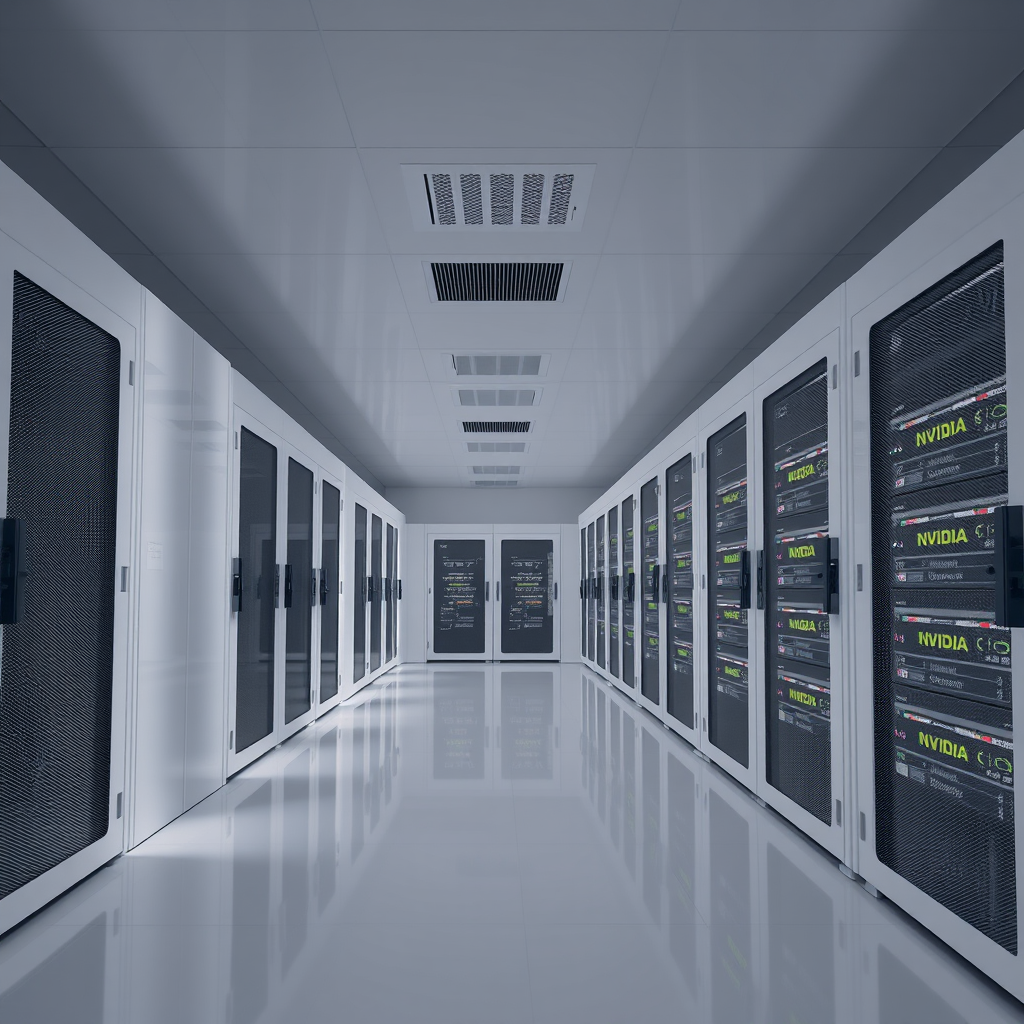
The sterile architecture of our digital future hides a darker, more complex reality beneath its polished surface.
We live in an era defined by the stark, blinding white aesthetic of modern hardware, where the sleek lines of a server rack or a GPU enclosure suggest a purity that is entirely illusory. This clinical design language serves as a visual distraction from the chaotic, high-stakes world of global supply chains and the immense geopolitical power wielded by entities like Nvidia. As we gaze into the abyss of our own technological dependency, we must confront the reality that our devices are not merely tools, but artifacts of a profound mechanical silence that masks the roar of industrial expansion. The deeper we look into the shadows cast by these glowing white monoliths, the more we realize that the true cost of our digital convenience is paid in the currency of social and political autonomy.
The Aesthetics of Clinical Control
The contemporary obsession with minimalist, white-on-white hardware design is not an accident of fashion, but a calculated psychological maneuver. By stripping away the industrial grit of the past, manufacturers create an environment that feels sanitized, safe, and inherently neutral, effectively distancing the user from the raw, often brutal processes required to manufacture high-end silicon. This aesthetic of technological purity suggests that the machine is a benign extension of the human mind, rather than a complex node in a vast, extractive network of global commerce. When we interact with these pristine interfaces, we are conditioned to ignore the heat, the noise, and the human labor that exist just beyond the frame of our immediate experience.
This visual language of clinical perfection mirrors the way modern corporations present themselves to the public, emphasizing transparency and innovation while obscuring the opaque mechanisms of their influence. The stark white chassis of a modern workstation acts as a shroud, hiding the intricate, messy reality of global logistics and the environmental degradation inherent in the production of advanced semiconductors. By framing technology as an ethereal, weightless phenomenon, the industry successfully decouples the product from the planet, allowing consumers to participate in a cycle of consumption that feels disconnected from the physical world. We are encouraged to admire the form, but we are actively discouraged from questioning the function of the power structures that dictate the availability and distribution of these essential tools.
The Shadow of the Silicon Hegemony
Beneath the polished exterior of our digital lives lies a complex web of global commerce that operates largely in the dark, far removed from the scrutiny of the average user. Companies like Nvidia have ascended to the status of modern deities, their market valuations reflecting a reality where the control of compute power is synonymous with the control of the future itself. This concentration of power creates a form of mechanical silence, where the sheer scale of operations makes it impossible for individual voices to challenge the trajectory of technological development. The shadows cast by these corporate giants are long, stretching across international borders and influencing everything from national security policies to the fundamental structure of the internet economy.
The influence of these entities is not merely economic; it is deeply political, shaping the way information is processed, prioritized, and disseminated across the globe. As we become increasingly reliant on proprietary hardware and closed-source ecosystems, we surrender our agency to the architects of this new digital order. The silence of the machine is the silence of the user, a quiet acquiescence to a system that prioritizes efficiency and profit over democratic oversight and human well-being. To understand the true nature of this silicon hegemony, one must look past the marketing materials and examine the underlying power dynamics that allow a handful of corporations to dictate the terms of our technological existence. You can learn more about the shifting landscape of global tech power by visiting Bloomberg Technology to track the latest market movements.
The Myth of Neutral Infrastructure
There is a pervasive myth that the infrastructure of the internet and the hardware that powers it are neutral, objective platforms that exist independently of human bias. This narrative is essential to the maintenance of the status quo, as it prevents us from recognizing that every line of code and every physical circuit board is imbued with the values and priorities of its creators. The clinical aesthetic of our hardware reinforces this myth, suggesting that because the machine is cold and logical, it must also be impartial. However, the reality is that our digital infrastructure is a reflection of the specific political and economic interests of the corporations that build and maintain it, creating a feedback loop that reinforces existing power imbalances.
When we treat technology as a neutral utility, we lose the ability to critique the ways in which it shapes our social reality and limits our potential for collective action. The mechanical silence of the server farm is not a sign of objectivity, but a sign of exclusion, where the voices of those who do not fit into the dominant technological paradigm are systematically silenced or ignored. By acknowledging that our tools are inherently political, we can begin to reclaim our agency and demand a more equitable approach to the development and deployment of new technologies. This requires a fundamental shift in how we perceive the relationship between the user, the machine, and the corporate entities that sit at the center of our digital lives.
The Cost of Mechanical Silence
The true cost of our obsession with high-performance computing is often hidden in plain sight, buried under layers of corporate jargon and the promise of a brighter, more efficient future. We are currently witnessing an unprecedented expansion of industrial capacity, driven by the insatiable demand for AI-ready hardware and the massive data centers required to support it. This growth comes at a significant environmental and social cost, yet it is framed as a necessary step in the evolution of human civilization. The mechanical silence of this expansion is deafening, as the communities most affected by the resource extraction and energy consumption required for this growth are rarely given a seat at the table.
As we continue to push the boundaries of what is possible with silicon, we must ask ourselves what we are willing to sacrifice in the name of progress. The clinical, white aesthetic of our modern devices serves as a constant reminder of our detachment from the physical consequences of our digital consumption. If we are to build a future that is truly sustainable and democratic, we must break the silence and demand greater transparency from the companies that hold the keys to our technological future. You can explore the broader implications of these industrial trends by reading more at The Verge, which provides critical analysis on the intersection of technology and society.
Final Thoughts
The age of Nvidia and the rise of the silicon-driven economy represent a pivotal moment in human history, one that demands a more critical and engaged perspective from all of us. We must look past the clinical, white aesthetic of our devices and confront the shadows of power and influence that define our modern digital landscape. By recognizing the political nature of our technology and the hidden costs of our convenience, we can begin to challenge the mechanical silence that threatens to define our future. The path forward requires us to be more than just passive consumers; we must become active participants in the shaping of a world that values human agency over the cold, calculated efficiency of the machine. Only by stepping out of the shadows and into the light of critical inquiry can we hope to reclaim our autonomy in an increasingly automated world.