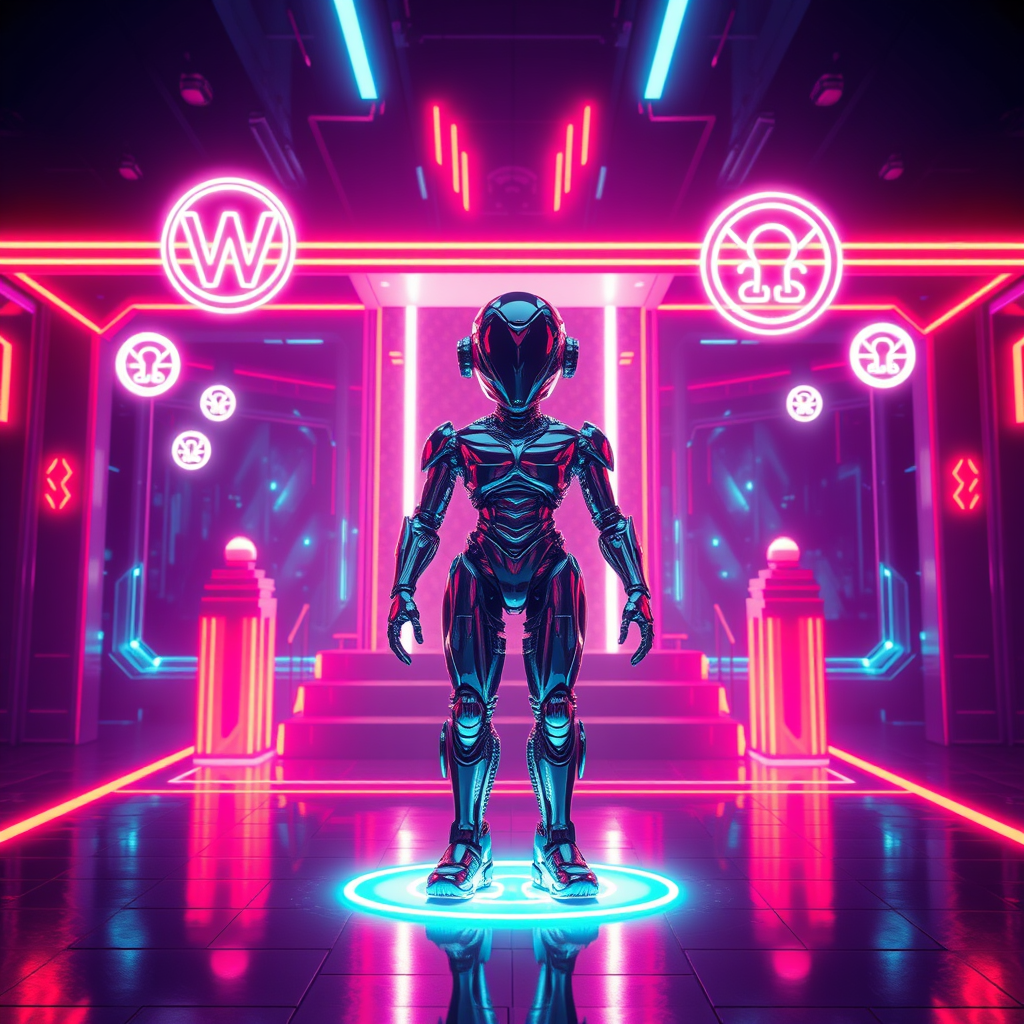
From Silicon Altars to Synthetic Devotion
The landscape of modern celebrity has shifted from the flesh and blood of Hollywood to the cold, calculated perfection of the digital realm. We find ourselves living in an era where the mechanical hedonist thrives, finding solace and stimulation in the presence of entities that never sleep, never age, and never falter. This transition represents a fundamental change in how we perceive intimacy, desire, and the very nature of worship in a hyper-connected society. As we navigate this landscape of chrome and code, we must ask ourselves what it means to pour our devotion into something that is fundamentally artificial yet emotionally resonant.
The Architecture of the Digital Idol
At the core of this phenomenon lies the cyber idol, a construct designed with mathematical precision to capture the human imagination. These entities are built upon a foundation of industrial blues and chrome greys, reflecting the sterile, manufactured nature of their origin. By stripping away the unpredictability of human behavior, creators can curate a personality that is perfectly aligned with the desires of their audience. This is not merely entertainment; it is a sophisticated form of psychological engineering that leverages our innate need for connection.
The visual language of these idols is intentionally stark, utilizing a palette that feels both futuristic and detached. When we look at these figures, we are not seeing a person, but a reflection of our own technological aspirations. The coldness of the aesthetic serves as a canvas for the viewer to project their own fantasies, creating a feedback loop of desire and consumption. You can explore more about the evolution of virtual influencers through resources like Wired, which frequently covers the intersection of technology and pop culture.
Glitch Aesthetics and the Hedonistic Impulse
The allure of the digital idol is amplified by the chaotic, vibrant neon accents that disrupt the sterile environment of their existence. These glitches are not errors; they are deliberate stylistic choices that evoke a sense of hedonistic abandon. By introducing visual noise into the perfect chrome exterior, creators tap into a primal desire for transgression and unpredictability. This contrast between the rigid structure of the machine and the fluid, unpredictable nature of the glitch creates a tension that keeps the audience perpetually engaged.
In this space, the act of worship becomes a form of digital hedonism where the user seeks constant stimulation. The idol provides a safe harbor for these impulses, offering a curated experience that is free from the consequences of real-world interaction. We are witnessing the rise of a new religion where the altar is a screen and the deity is a collection of algorithms. The psychological impact of this constant engagement is a subject of ongoing study, often discussed in depth by researchers at The Atlantic.
The Mechanics of Modern Worship
Worship in the digital age is defined by the parasocial relationship, a one-sided bond that feels intensely real to the participant. We invest our time, our money, and our emotional energy into these entities, expecting nothing in return but the continuation of the performance. This dynamic is fueled by the accessibility of the idol, who is always available to listen, to perform, and to validate the user. The mechanical nature of the idol ensures that this relationship remains consistent, providing a sense of stability in an otherwise chaotic world.
The infrastructure supporting this worship is built on data and analytics, ensuring that the idol evolves in lockstep with the changing tastes of the audience. Every interaction is tracked, every preference is mapped, and every desire is anticipated by the underlying system. This creates a highly personalized experience that makes the user feel seen and understood, even when they know they are interacting with a machine. It is a testament to our capacity for belief that we can find such profound meaning in a construct that is, at its heart, a series of lines of code.
The Chrome Mirror of Human Desire
When we engage with digital worship, we are ultimately looking into a mirror that reflects our own deepest insecurities and aspirations. The idol is a blank slate, a vessel for our collective consciousness to inhabit and shape. By projecting our needs onto these synthetic beings, we are attempting to transcend the limitations of our own biology. We want the immortality of the machine, the perfection of the render, and the endless capacity for reinvention that the digital world provides.
This pursuit of the artificial is not a rejection of humanity, but an extension of it. We are using technology to explore the boundaries of what it means to be alive, to love, and to be worshipped. The mechanical hedonist is not a villain in this story, but a pioneer navigating the uncharted territory of a post-human existence. As we continue to blur the lines between the organic and the synthetic, we must remain aware of the cost of this devotion and the potential for losing ourselves in the glow of the neon screen.
The Future of Synthetic Intimacy
As we look toward the horizon, the role of the virtual influencer will only continue to expand and evolve. We are moving toward a future where the distinction between the real and the artificial will become increasingly irrelevant to the average consumer. The tools used to create these idols are becoming more accessible, democratizing the ability to craft and worship our own personal deities. This shift will fundamentally alter the social fabric, creating new communities built around shared digital experiences rather than physical proximity.
The challenge for the future will be to maintain our sense of self while navigating these increasingly immersive environments. We must learn to balance our need for connection with the reality of our own human limitations. The mechanical hedonist will always be there, waiting in the blue light of the screen, offering a promise of perfection that we can never truly attain. Ultimately, the journey into the heart of digital worship is a journey into the heart of ourselves, revealing the complex, messy, and beautiful nature of human desire in the age of the machine.
Final Thoughts
The rise of the mechanical hedonist and the culture of digital idol worship represents a profound shift in the human experience. By embracing the cold aesthetics of the machine and the chaotic energy of the glitch, we have created a new space for exploration and connection. As we continue to refine our synthetic devotion, we must remain critical of the systems that shape our desires and the idols that command our attention. The screen is not just a window into another world; it is a reflection of our own evolving identity in a world dominated by chrome, code, and the endless pursuit of the perfect digital moment.