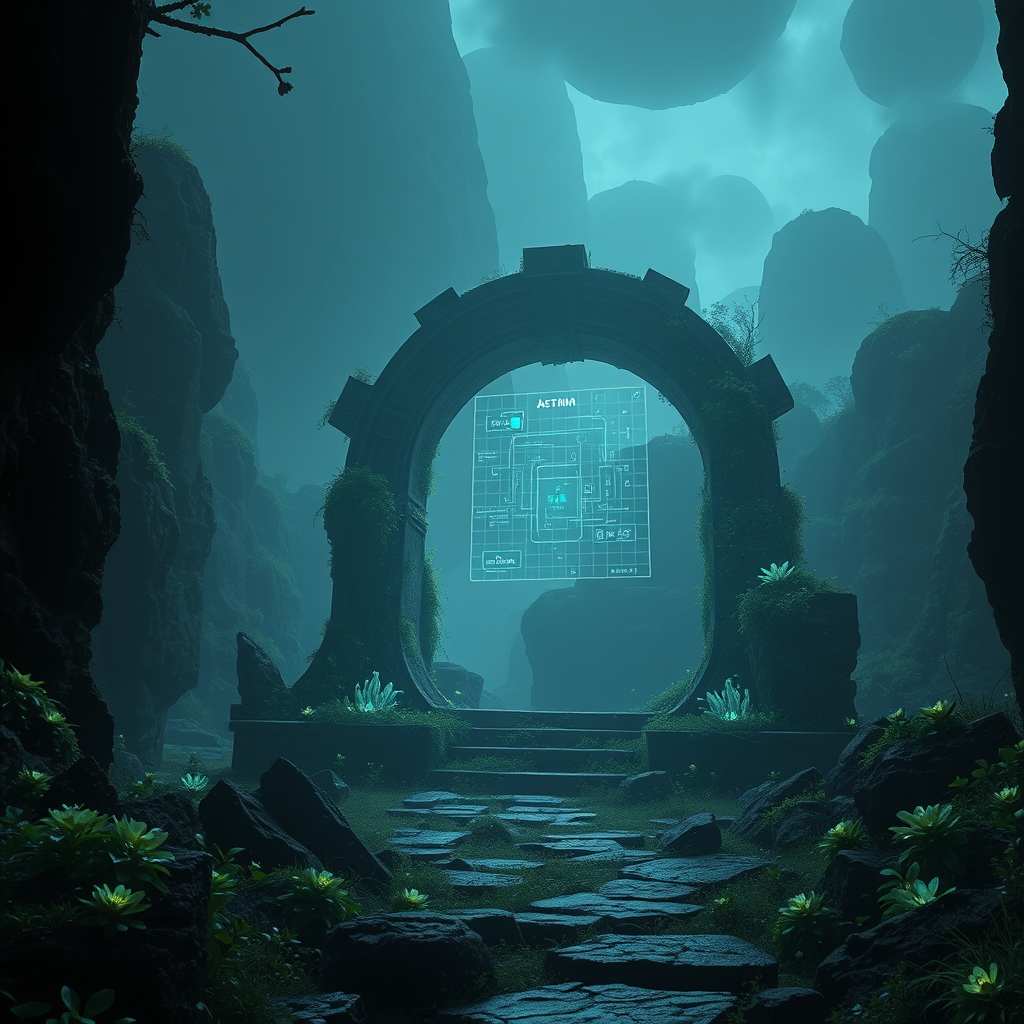
Navigating the Collision Between Primordial Wisdom and Silicon Supremacy
The history of our planet is written in layers of sediment, a slow and deliberate record of biological adaptation that spans billions of years. In this ancient ecology, every death serves as a nutrient for the next cycle of life, creating a closed loop of existence that is as brutal as it is beautiful. Today, however, we find ourselves standing at a precipice where the organic rhythm of the earth is being forcibly overwritten by the cold, neon pulse of digital acceleration. This modern hubris suggests that we can engineer our way out of the consequences of our own consumption, treating the planet as a hardware problem rather than a living system. We must confront the reality that our technological trajectory is increasingly detached from the biological constraints that once defined our survival.
The Moss-Covered Foundation of Biological Time
Deep within the temperate rainforests, the scent of damp earth and decaying matter serves as a reminder of the slow, patient work of nature. This ancient ecology operates on a timescale that renders human ambition almost invisible, prioritizing resilience and interconnectedness over efficiency and speed. When we look at the moss-covered stones of a centuries-old forest, we are witnessing a masterclass in sustainable existence where nothing is wasted and everything is repurposed. The ecological balance that has sustained life for eons is not a static state but a dynamic equilibrium that requires constant, subtle adjustment. By ignoring these foundational principles, we risk severing the very roots that keep our civilization anchored to the physical world.
Modern society often views the natural world as a resource to be extracted or a backdrop for our digital lives, failing to recognize that we are biological entities first and digital consumers second. The wisdom of the forest lies in its ability to absorb shocks and adapt to change without losing its essential character. In contrast, our current systems are designed for rapid growth and immediate gratification, which are inherently antithetical to the slow, steady growth of a healthy ecosystem. We have traded the wisdom of the soil for the convenience of the cloud, forgetting that the cloud itself requires a massive, physical infrastructure that is rapidly depleting our finite resources. To understand our future, we must first reconnect with the slow, deliberate pace of the natural world.
The Neon Glare of Technological Hubris
There is a distinct, sharp quality to the blue light emitted by our screens, a color that has become the signature of our modern age. This neon hue represents a departure from the earthy tones of the natural world, signaling a shift toward a reality that is calculated, digitized, and increasingly detached from human experience. We are currently witnessing a form of technological hubris that assumes we can solve the climate crisis through algorithms and artificial intelligence alone. This mindset ignores the fact that technology is a tool, not a savior, and that our reliance on it often blinds us to the systemic issues that require fundamental behavioral change. The cold logic of the machine cannot replicate the nuanced, messy, and vital processes of a living planet.
As we push further into the realm of the synthetic, we find ourselves surrounded by a digital architecture that demands constant attention and optimization. This environment encourages us to view the world through a lens of data points and metrics, stripping away the qualitative richness of our lived experience. The danger lies not in the technology itself, but in our belief that it is a substitute for the natural world. We are building a digital cage that promises efficiency while slowly eroding our capacity for deep, contemplative thought. By prioritizing the neon glow of the screen over the mossy reality of the earth, we are effectively choosing a simulated future over a sustainable one.
The Ethics of the End
What does it mean to reach the end of an era, and how do we define the ethics of our departure? The anthropocene era has forced us to confront our role as the primary architects of planetary change, a responsibility that we are largely unprepared to shoulder. We are currently engaged in a grand experiment where the outcome is uncertain, and the stakes are nothing less than the survival of our species. The ethics of the end require us to look beyond our own immediate needs and consider the long-term impact of our actions on the biosphere. This is not merely a matter of conservation, but a fundamental reevaluation of our relationship with the earth and our place within its complex web of life.
We must ask ourselves whether our current path is one of progress or one of profound disconnection. The ethics of the end demand that we acknowledge the limits of our power and the necessity of humility in the face of natural forces that we cannot control. Instead of attempting to dominate the earth, we should strive to become better stewards of the systems that sustain us. This requires a shift in perspective, moving away from the extractive mindset that has defined the industrial age and toward a regenerative approach that honors the interconnectedness of all life. The choices we make today will echo through the geological record, serving as a testament to our wisdom or our folly.
Reclaiming the Earth in a Digital Age
Reclaiming our connection to the natural world does not mean abandoning technology, but rather integrating it in a way that respects the biological limits of our planet. We need to cultivate a sustainable future that balances the benefits of innovation with the necessity of ecological preservation. This involves rethinking our consumption patterns, supporting local ecosystems, and fostering a deeper appreciation for the natural world in our daily lives. By grounding ourselves in the physical reality of the earth, we can develop a more nuanced understanding of the role that technology should play in our society. It is about finding a harmony between the moss and the machine, ensuring that our digital advancements serve the health of the planet rather than its depletion.
The transition to a more sustainable way of living will require a collective effort and a willingness to challenge the status quo. We must demand transparency from the corporations that drive our technological growth and advocate for policies that prioritize the long-term health of the environment. This is a journey that begins with individual awareness and expands into a global movement for change. By embracing the wisdom of the past and applying it to the challenges of the present, we can forge a path that is both technologically advanced and ecologically sound. The future is not a predetermined destination, but a landscape that we are actively shaping with every decision we make.
Final Thoughts
The tension between ancient ecology and modern hubris is the defining struggle of our time, a conflict that will determine the legacy we leave for future generations. We stand at a crossroads where we must choose between the cold, neon promise of a simulated existence and the rich, mossy reality of a living planet. By embracing a more humble and intentional approach to our technological development, we can begin to heal the rift between our species and the earth. Let us move forward with the understanding that our survival is inextricably linked to the health of the natural world, and that true progress is measured not by the speed of our processors, but by the resilience of our ecosystems. For more insights on the intersection of nature and technology, you can explore resources like Nature or delve into the philosophical implications of our digital age at The Atlantic. The path ahead is challenging, but it is also an opportunity to redefine what it means to be human in an age of unprecedented change.