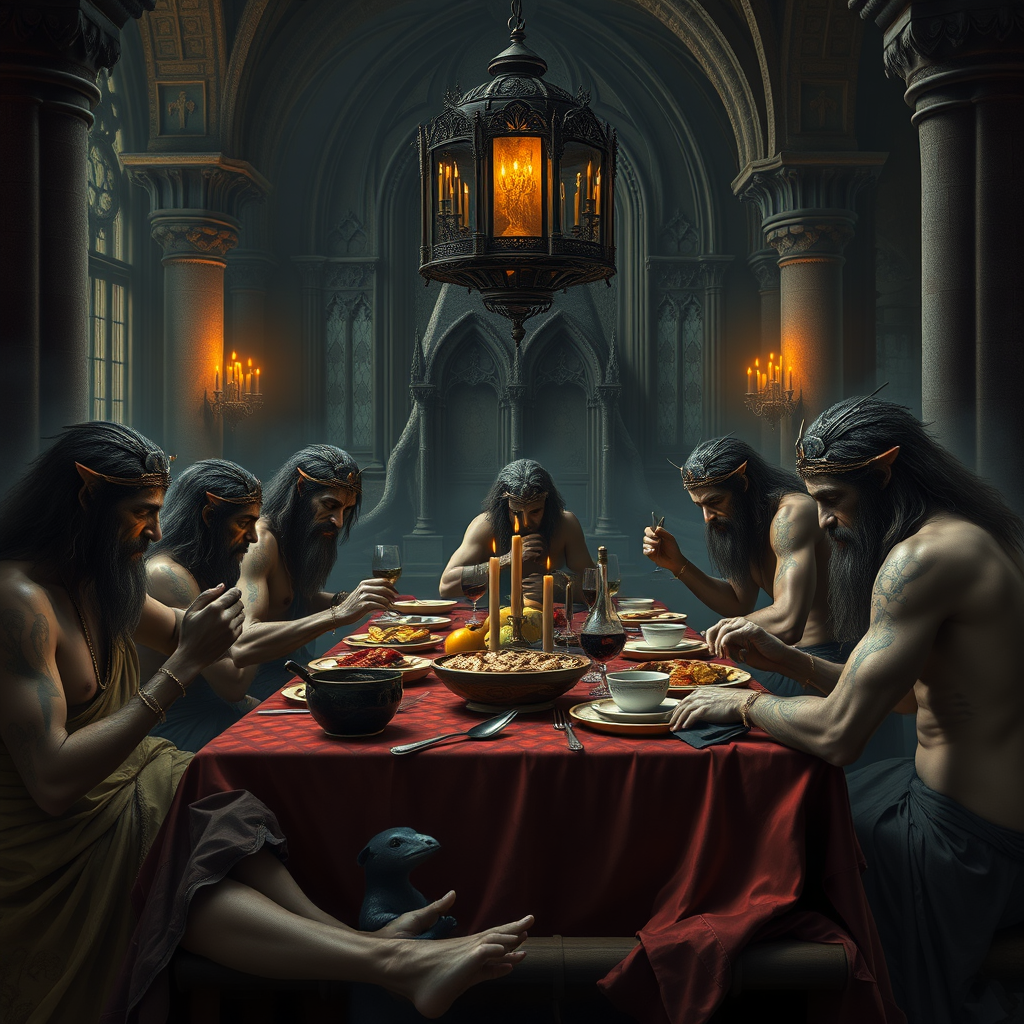
Where Shadow Meets Silk: Unearthing the Allure of Dark Antiquity
The modern aesthetic landscape is often characterized by fleeting trends, yet some styles possess an enduring, almost magnetic pull that transcends the ephemeral. Gothic Hedonism is not merely a fashion statement; it is a philosophical alignment, a deliberate choice to inhabit spaces saturated with history, drama, and unapologetic sensory pleasure. This unique subculture draws deeply from the visual vocabulary of the late Medieval period, the decadent excesses of the Victorian era, and the rich, often tragic, narratives of classical antiquity. We explore how the strategic deployment of deep blacks, the visceral impact of rich crimsons, and the grounding texture of aged parchment tones create an environment where darkness is not absence, but presence, inviting indulgence without apology.
The Palette of Power: Black, Blood, and Sepia
The foundation of Gothic Hedonism rests firmly on its color strategy, a deliberate rejection of bright, superficial palettes. Deep, velvety black serves as the canvas, absorbing light and demanding introspection, mirroring the profound depths of historical contemplation. This is not the flat black of modern minimalism, but the nuanced black found in aged velvet, obsidian, or the ink of forgotten manuscripts. When paired with rich crimson—the color of spilled wine, crushed velvet theater seats, and vital life force—the contrast becomes immediate and intoxicating. This duality speaks to the core tension of the lifestyle: the embrace of mortality alongside the celebration of intense, immediate experience.
The third essential component, aged parchment, acts as the necessary counterpoint, preventing the aesthetic from collapsing into pure shadow. This tone, reminiscent of vellum scrolls and crumbling library walls, introduces the element of ancient wisdom and enduring legacy. Imagine a room where heavy black drapery frames a window overlooking a moonlit garden, the only illumination coming from flickering candlelight reflecting off gilt-edged, leather-bound tomes whose pages have yellowed over centuries. This visual language speaks volumes about valuing substance over surface, and history over the present moment. For deeper inspiration on historical color theory, one might explore the works detailing Baroque interior design, which mastered this dramatic interplay of light and shade The Metropolitan Museum of Art’s collection offers superb examples of this chiaroscuro effect in decorative arts.
Architectural Echoes: Ruins, Ritual, and Refinement
Gothic Hedonism finds its most potent expression in environments that suggest age, grandeur, and perhaps a touch of beautiful decay. This aesthetic favors architectural elements that tell stories: soaring arches, heavy carved wood, wrought iron detailing, and the deliberate incorporation of elements that mimic ruins or crypts. It is about creating a sanctuary that feels both timeless and slightly dangerous, a place where one can indulge in refined pleasures away from the mundane gaze of the outside world. Think of the elaborate stonework found in European cathedrals, translated into the intimate scale of a private study or salon.
The hedonistic aspect is woven in through texture and comfort, ensuring that the darkness is luxurious, not oppressive. Heavy silks, deep-pile rugs that swallow sound, and furniture upholstered in rich, jewel-toned fabrics—often burgundy, deep sapphire, or emerald—are crucial. These materials invite touch and linger, encouraging the occupant to slow down and savor the moment, whether that involves reading obscure philosophy or enjoying a complex, aged spirit. This commitment to sensory richness is what elevates the style from mere gloom to true alt-lifestyle aesthetics. Consider the influence of Romantic poets who often sought inspiration in crumbling abbeys and overgrown cemeteries; their environments were curated reflections of their inner worlds.
The Ritual of Indulgence: Sensory Overload and Subtlety
Hedonism within this framework is not about cheap thrills; it is about highly curated, meaningful sensory experiences—rituals that honor the body and the mind. This might manifest in the meticulous preparation of elaborate meals featuring dark fruits and rich sauces, or the slow, deliberate brewing of rare teas served in antique silver. The focus shifts from rapid consumption to deep appreciation, a hallmark of true connoisseurship. The atmosphere must support this focus, often achieved through carefully managed lighting.
Lighting is perhaps the most critical tool in mastering this aesthetic, demanding a move away from harsh overhead illumination. Instead, the space should be illuminated by dozens of low-wattage sources: candelabras dripping with black wax, shaded lamps casting pools of amber light, and perhaps strategically placed uplighting to highlight architectural features or dramatic artwork. This creates pockets of intimacy and shadow, allowing for private contemplation even in a shared space. The pursuit of gothic indulgence requires an understanding that shadow is as important as light in defining form and mood. For those interested in the historical use of candlelight in interiors, research into 18th-century French salons provides fascinating context The Victoria and Albert Museum’s decorative arts section showcases many relevant artifacts.
Curating the Collection: Artifacts of Obsession
A space defined by Gothic Hedonism is inherently a collector’s space, filled with objects that carry weight, history, and narrative intrigue. These are not mere decorations; they are talismans of a life lived deliberately. Collections might focus on anatomical drawings, esoteric texts bound in leather, antique scientific instruments, or morbidly beautiful natural history specimens preserved in dark glass jars. The key is that every object must contribute to the overarching narrative of darkness, beauty, and the passage of time.
The integration of these artifacts must feel organic, as if they have accumulated naturally over generations of passionate pursuit, rather than being purchased in a single shopping spree. Display cases should be heavy, perhaps featuring dark wood or ironwork, protecting precious items while simultaneously framing them dramatically against a backdrop of deep color. This dedication to curated objects reinforces the theme of ancient alt-lifestyle aesthetics, suggesting a deep connection to the past that informs the present experience. Finding inspiration for display techniques can often be found in the old cabinets of curiosity, or Wunderkammern, which celebrated the strange and the beautiful equally. Explore the concept of the dark academia movement for contemporary interpretations of this collecting impulse The Guardian on Dark Academia provides a modern lens.
Final Thoughts
Gothic Hedonism is ultimately a commitment to depth—depth of color, depth of history, and depth of experience. It rejects the superficial gloss of the mainstream in favor of an aesthetic that is rich, complex, and profoundly evocative. By mastering the interplay between the starkness of black, the passion of crimson, and the wisdom of parchment, one crafts an environment that is both a fortress against the ordinary and a stage for exquisite living. Embracing this style means choosing a life where beauty is found in the shadows, where history is a constant companion, and where every sensory input is treated as a sacred act of hedonistic pleasure. This is more than just decorating; it is the architecture of a deeply felt, gothic lifestyle, inviting you to savor the darkness and the drama it contains Architectural Digest on Gothic Design.