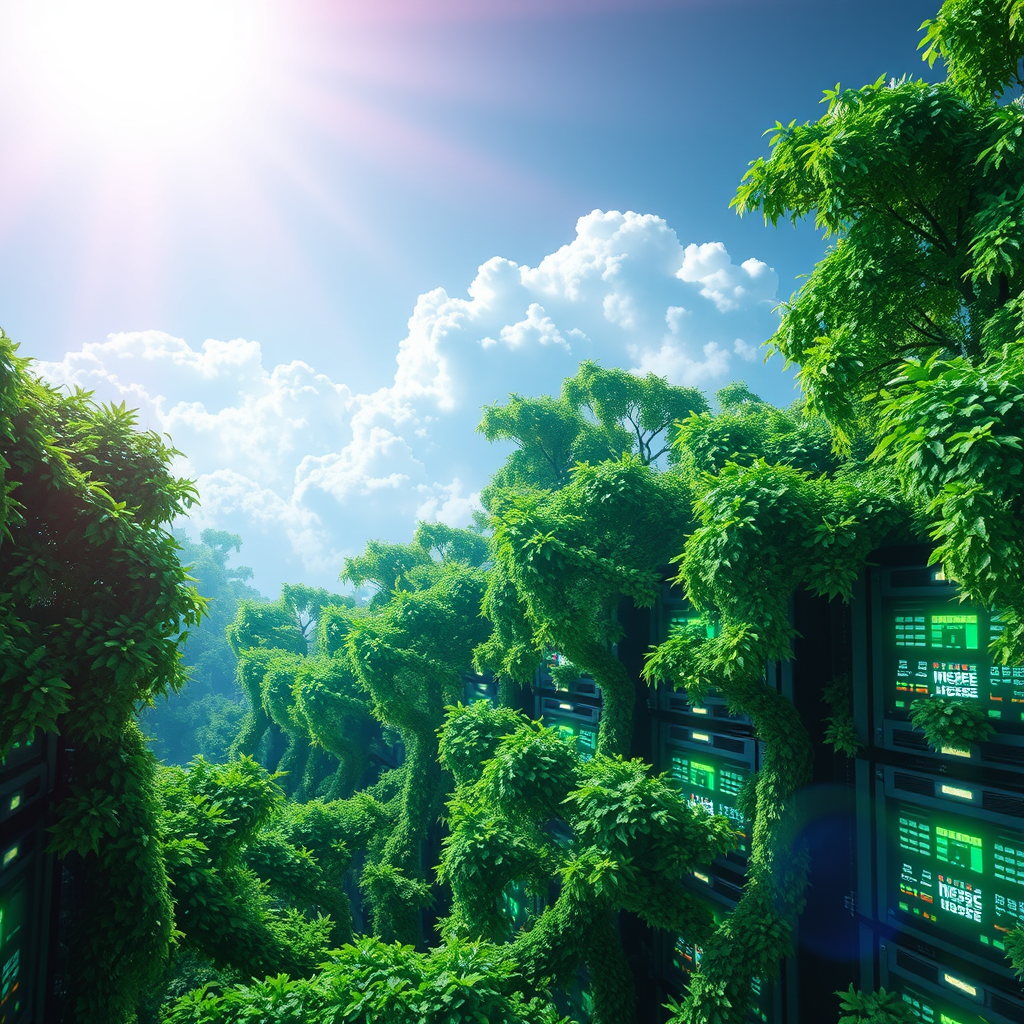
Reclaiming the Virtual Horizon from the Silicon Shadow
The modern internet is often perceived as an ethereal, weightless realm, a cloud-based paradise where information flows like water and ideas transcend physical boundaries. Yet, beneath this shimmering facade of connectivity lies a sprawling, energy-hungry infrastructure that demands a heavy toll from our physical planet. We have built a digital heaven that relies on the extraction of rare earth minerals, the burning of fossil fuels to power massive server farms, and the creation of mountains of electronic waste. To achieve a true digital ecology, we must confront the stark contrast between the vibrant, life-giving green of our natural world and the cold, dark, and rigid aesthetic of our current technological landscape. This is not merely a call for better hardware, but a radical protest against the unsustainable trajectory of our online existence.
The Hidden Cost of the Cloud
When we speak of the cloud, we are rarely referring to the fluffy white formations in the sky, but rather to the industrial-scale data centers that anchor our digital lives to the earth. These facilities consume staggering amounts of electricity, often sourced from non-renewable grids that exacerbate the climate crisis. The physical footprint of our online interactions is expanding at an exponential rate, yet the average user remains blissfully unaware of the carbon cost of a single search query or a high-definition video stream. We must recognize that every byte of data stored, processed, and transmitted carries a tangible environmental weight that we can no longer afford to ignore.
The industry often hides behind the promise of efficiency, claiming that virtualization and cloud computing are inherently greener than traditional on-premise infrastructure. While there is some truth to these claims, the rebound effect—where increased efficiency leads to higher consumption—has effectively negated any potential gains. We are building more data centers, upgrading hardware at an unsustainable pace, and encouraging a culture of constant connectivity that demands perpetual power. To learn more about the environmental impact of our digital habits, one might look at the research provided by the International Energy Agency regarding global data center energy consumption.
Designing for a Sustainable Future
The aesthetic of the internet has long been dominated by dark modes, sleek minimalism, and high-contrast interfaces that prioritize engagement over efficiency. While these design choices are visually striking, they often mask the underlying complexity and energy intensity of the platforms we inhabit. A sustainable technological revolution requires a shift in how we conceive of digital design, moving toward a philosophy that values longevity, low-bandwidth accessibility, and energy-conscious coding. By prioritizing lightweight web standards and reducing the bloat that characterizes modern software, we can create a digital environment that respects the limits of our physical world.
This shift in design is not just about saving energy; it is about reclaiming the human experience from the clutches of algorithmic optimization. When we strip away the unnecessary animations, the tracking scripts, and the high-resolution assets that serve only to keep users scrolling, we reveal a cleaner, more intentional digital space. This is the essence of sustainable web design, a movement that seeks to align our online tools with the principles of ecological stewardship. By embracing a more austere and efficient aesthetic, we can protest the excesses of the current digital paradigm and pave the way for a more harmonious relationship between technology and nature.
The Ethics of Electronic Waste
The hardware that powers our digital heaven is frequently discarded with reckless abandon, contributing to a global crisis of electronic waste that poisons our soil and water. We live in a culture of planned obsolescence, where devices are designed to fail or become outdated within a few years, forcing consumers to constantly upgrade. This cycle of consumption is the antithesis of a green future, as it relies on the continuous extraction of finite resources and the exploitation of labor in the global south. We must demand a shift toward circularity, where hardware is built to last, easily repaired, and fully recyclable.
Protesting for a greener heaven online means advocating for the right to repair and supporting companies that prioritize modularity and longevity in their product design. It is a rejection of the disposable culture that has come to define our relationship with technology. When we choose to keep our devices longer, we are making a political statement against the forces that profit from our dissatisfaction and our waste. For further reading on the global impact of e-waste, consider the reports published by the Global E-waste Statistics Partnership, which highlight the urgent need for systemic change in how we manage our technological discards.
Building a Digital Commons
The current internet is largely controlled by a handful of massive corporations that prioritize profit over the health of our planet and the well-being of our society. These platforms are designed to extract attention and data, creating a digital ecosystem that is inherently extractive and exploitative. To build a truly sustainable digital future, we must foster a digital commons that is decentralized, community-governed, and ecologically responsible. This means supporting open-source software, decentralized networks, and platforms that are built by the people, for the people, rather than for the benefit of shareholders.
A digital commons would allow us to reclaim our agency and build tools that serve our needs without compromising the environment. By moving away from centralized, energy-intensive platforms, we can reduce our reliance on the massive server farms that currently dominate the landscape. This is a radical act of protest, a way of saying that we refuse to participate in a system that destroys the very world we inhabit. It is a vision of a digital heaven that is not built on the ruins of the earth, but in partnership with it, reflecting the vibrant green of a thriving, sustainable planet.
The Path Toward Technological Harmony
Achieving a greener heaven online requires a fundamental shift in our collective consciousness, moving from passive consumption to active stewardship. We must become more aware of the physical reality of our digital lives and demand accountability from the tech giants that shape our world. This involves supporting policies that mandate transparency in energy usage, advocating for renewable energy transitions in the tech sector, and making conscious choices about the platforms we use and the devices we own. It is a long and difficult road, but it is the only path toward a future where technology serves humanity without destroying the natural world.
We must also embrace the concept of digital minimalism, recognizing that our constant need for connection is often a distraction from the richness of our physical lives. By intentionally limiting our digital footprint, we can reduce the demand on the infrastructure that powers our online existence. This is not about abandoning technology, but about using it with intention and purpose, ensuring that our digital habits are in alignment with our values. As we look toward the future, let us strive to create a digital landscape that is as vibrant, diverse, and resilient as the natural world itself, ensuring that our online heaven is a place of genuine light and sustainable growth.
Final Thoughts
The protest for a greener heaven online is a struggle for the soul of our technological future, a fight to ensure that our digital progress does not come at the cost of our planetary survival. By embracing green computing and challenging the extractive nature of modern tech, we can begin to build a digital world that honors the earth rather than exploiting it. Let us commit to a path of intentionality, sustainability, and radical change, ensuring that the light of our digital heaven is one that illuminates a path toward a healthier, more vibrant world for all. The revolution starts with our choices, our voices, and our refusal to accept the status quo of a digital landscape built on shadow and waste.