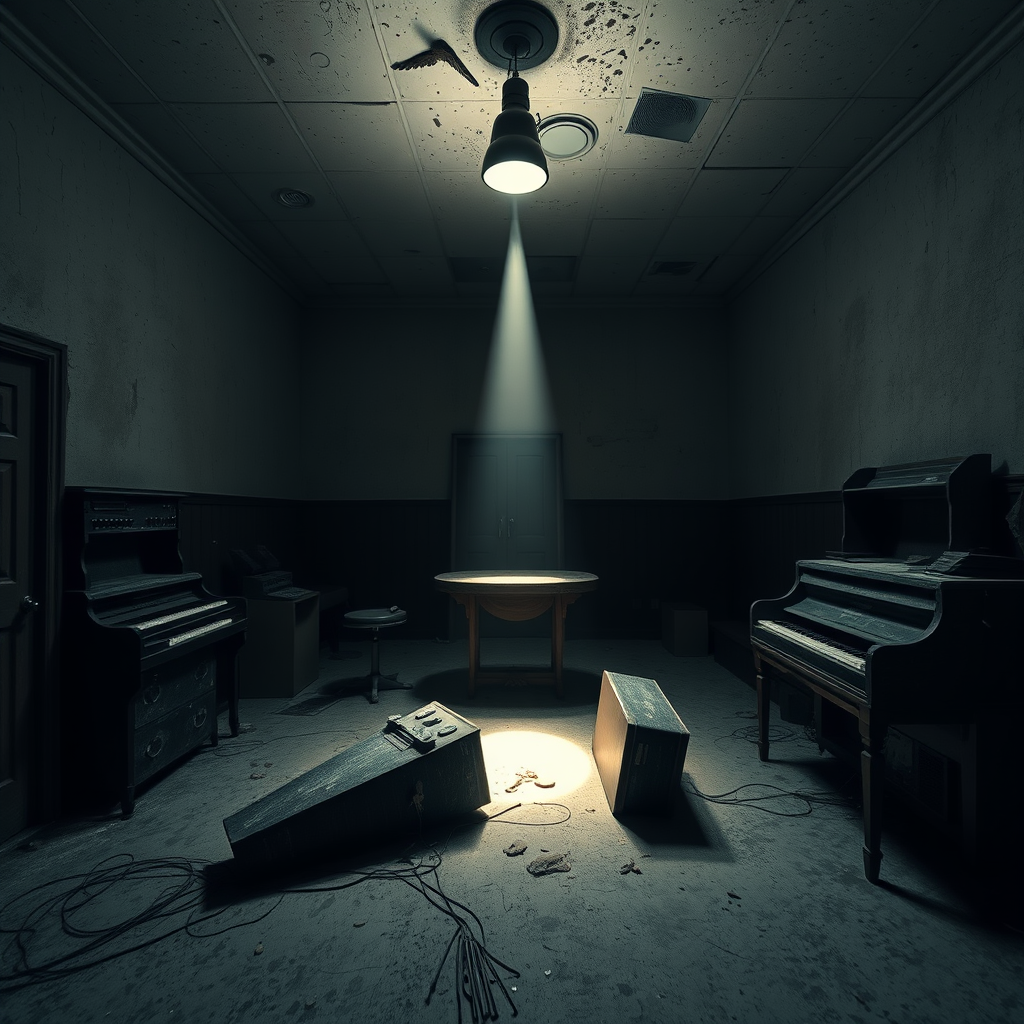
Echoes in the Void: Unearthing the Lost Architectures of Creative Expression
In the vast, sprawling landscape of digital and physical archives, there exist pockets of creative output that have been systematically erased by the relentless march of progress. These technical genres, once vibrant and essential, now reside in a state of perpetual twilight, obscured by the glare of modern trends and the convenience of mass-market accessibility. To engage with these forgotten forms is to step into a desaturated world where the palette is defined by the interplay of deep shadows and profound silence. This tragedy of obscurity is not merely a loss of data, but a thinning of the human cultural fabric that once relied on these intricate, specialized languages to communicate complex truths. By examining the intersection of these neglected mediums and the aesthetic of the void, we can begin to understand why some sparks of artistic legacy are destined to flicker out while others are preserved in the amber of institutional memory.
The Architecture of Obsolescence
The history of technology is littered with the corpses of formats that were once considered the pinnacle of innovation. From the tactile complexity of early mainframe programming languages to the nuanced, analog-heavy workflows of mid-century industrial design, these genres demanded a level of mastery that is rarely required in our era of drag-and-drop interfaces. When a technical genre falls into disuse, it does not simply vanish; it retreats into a state of silence, waiting for a researcher or an enthusiast to exhume its skeletal remains. This process of fading away is inherently tragic because it represents the death of a specific way of thinking, a cognitive framework that was uniquely suited to the constraints of its time. The technical obsolescence of these tools mirrors the way we treat our own history, often discarding the difficult and the obscure in favor of the immediate and the frictionless.
Consider the intricate world of early computer-aided drafting or the specialized shorthand of mechanical engineering documentation that preceded the digital revolution. These were not merely methods of recording information; they were languages of precision that required a deep, almost meditative focus. As these practices were replaced by automated systems, the human element—the subtle, idiosyncratic touch of the practitioner—was stripped away. We are left with a void where once there was a vibrant, albeit niche, community of experts. This silence is heavy, a testament to the fact that when we lose the technical genre, we lose the specific perspective that allowed that genre to flourish in the first place. For more on the preservation of digital history, one might look to the work of the Computer History Museum, which serves as a sanctuary for these abandoned artifacts of human ingenuity.
The Aesthetics of the Desaturated Palette
There is a haunting beauty in the desaturated palette of forgotten technical genres, a visual language that speaks to the isolation of the practitioner. When a genre is no longer supported by the mainstream, its documentation, its interface, and its output often take on a monochromatic, austere quality. This is not a stylistic choice, but a byproduct of the decay that sets in when a system is no longer maintained or updated for a modern audience. The shadows that cling to these genres are the shadows of neglect, yet they possess an undeniable gravity that draws the curious mind toward them. It is within this visual bridge between the void of obscurity and the spark of artistic legacy that we find the true value of these lost arts.
To study these genres is to engage in a form of archeology where the artifacts are made of code, ink, and paper. The desaturation of these mediums acts as a filter, stripping away the superficial gloss of contemporary design and revealing the raw, functional core of the work. This aesthetic of silence is a powerful reminder that not all art needs to be loud or immediately consumable to be significant. By embracing the digital preservation of these forgotten forms, we are not just saving data; we are curating a gallery of human effort that defies the ephemeral nature of modern digital culture. The silence of these genres is not an absence of meaning, but a space where the observer is forced to project their own understanding, creating a unique dialogue between the past and the present.
The Tragedy of the Unheard Voice
The tragedy of forgotten technical genres is compounded by the fact that many of them were the primary vehicles for marginalized or highly specialized voices. When a genre is deemed unpopular, the individuals who dedicated their lives to mastering it are often rendered invisible, their contributions relegated to the footnotes of history. This erasure is a form of cultural violence, as it suggests that only the most popular or commercially viable forms of expression are worthy of being remembered. The artistic legacy of these individuals is often tied to the specific technical constraints they worked within, and when those constraints are removed or forgotten, the work itself loses its context and its power to resonate with future generations.
We must ask ourselves what we lose when we allow these voices to be silenced by the weight of indifference. The loss is not just technical; it is a loss of diversity in thought and approach. When we prioritize the mainstream, we narrow the scope of what is considered possible, creating a feedback loop that reinforces the status quo. By shining a light on these forgotten genres, we challenge the narrative that progress is a linear, upward trajectory. Instead, we see it as a complex, branching path where many promising avenues have been left behind in the dark. Organizations like the Internet Archive play a crucial role in preventing this total erasure, providing a platform for the voices that would otherwise be lost to the void.
Bridging the Void with Intentionality
To bridge the gap between the void of obscurity and the spark of legacy, we must approach these forgotten genres with a sense of intentionality. This means moving beyond mere nostalgia and engaging with the technical challenges that these genres once solved. It requires a commitment to archival research that goes beyond the surface level, digging into the manuals, the source code, and the personal accounts of those who lived through the era of these tools. By reconstructing the environment in which these genres thrived, we can begin to appreciate the nuance and the complexity that were once taken for granted. This is an act of reclamation, a way of asserting that the past still has something to teach us about the future.
The process of reclamation is inherently difficult, as it requires us to confront the silence and the shadows that have accumulated over decades. It is a slow, methodical process that demands patience and a willingness to work with incomplete information. Yet, the reward is a deeper understanding of the human capacity for innovation and the resilience of the creative spirit. When we successfully bridge this gap, we transform the void into a source of inspiration, proving that even the most obscure technical genre can hold a spark that illuminates our current path. This is the essence of cultural heritage, the ongoing effort to ensure that the voices of the past are not permanently extinguished by the passage of time.
Final Thoughts
The tragedy of forgotten technical genres is a reflection of our own tendency to prioritize the new over the meaningful. By acknowledging the beauty in the shadows and the importance of the silence that surrounds these lost arts, we can begin to cultivate a more inclusive and historically aware approach to our own creative endeavors. We must strive to be the stewards of these forgotten legacies, ensuring that the sparks of innovation they once provided continue to inform and inspire the generations to come. The void is not a destination, but a challenge to look closer, to listen harder, and to value the complexity that lies beneath the surface of our modern, streamlined world. Through this commitment, we ensure that the tragedy of obscurity is not the final chapter for these vital, if neglected, pieces of our shared human story.