When the Starlight Fades into the Void of Public Scrutiny
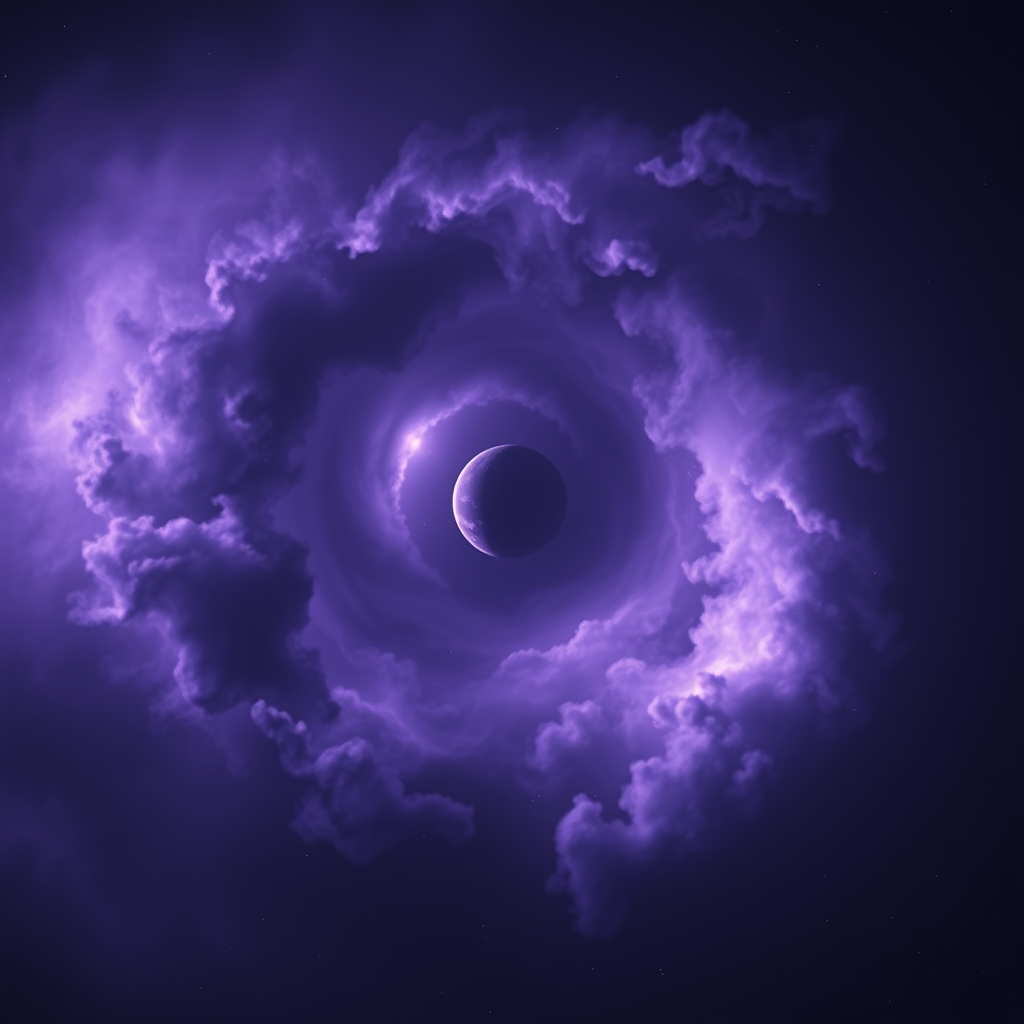
In the furthest reaches of the cosmos, there exists a celestial phenomenon known as the Violet Nebula, a swirling expanse of ionized gas that glows with a haunting, melancholic intensity. This deep, bruised purple hue is not merely a trick of light, but a visual representation of isolation, existing in a vacuum where sound cannot travel and warmth is a distant memory. Much like this lonely celestial body, the modern celebrity often finds themselves drifting through a similar expanse, surrounded by the blinding light of fame yet fundamentally disconnected from the human experience. The tragedy of the Violet Nebula lies in its beauty, which masks a profound emptiness, mirroring the way society consumes the image of a star while ignoring the person fading behind the glow. As we peel back the layers of this cosmic metaphor, we begin to see how the loss of privacy acts as a gravitational pull, dragging the individual into a dark, inescapable orbit of public expectation.
The Anatomy of a Celestial Isolation
The Violet Nebula is defined by its distance from the galactic center, a place where the density of stars thins out and the cold of the void takes hold. In the world of high-profile figures, this distance is mirrored by the social stratification that occurs the moment someone achieves global recognition. When a person becomes a public figure, they are no longer viewed as a human being with complex needs, but as a projection of collective desires and anxieties. This transition creates a psychological vacuum where the individual is forced to inhabit a space that is both hyper-visible and deeply lonely. The more they are watched, the less they are truly seen, leading to a state of existence that mirrors the cold, silent expansion of a distant nebula.
Scientists often describe the nebula as a graveyard of dying stars, where the remnants of past brilliance coalesce into something new and unrecognizable. Similarly, the celebrity must often shed their authentic self to survive the pressures of the industry, leaving behind a husk of their former identity. This process of shedding is not voluntary but is demanded by the machinery of fame, which requires constant reinvention to maintain relevance. As noted in studies on the psychology of fame, the constant surveillance of one’s life can lead to a fragmented sense of self, where the public persona eventually eclipses the private reality. The violet hue of the nebula serves as the perfect color for this transition, representing the bruising of the soul that occurs when one is constantly exposed to the harsh radiation of public scrutiny.
The Gravitational Pull of Constant Surveillance
Gravity in the deep reaches of space is a relentless force, pulling matter toward a central point until it collapses under its own weight. For the celebrity, the paparazzi and the relentless cycle of social media act as this gravitational force, pulling every private moment into the public sphere. There is no escape velocity for the famous, as every action is tracked, analyzed, and commodified by an audience that feels entitled to their every waking moment. This loss of privacy is not just an inconvenience; it is a fundamental violation of the human need for a sanctuary where one can be imperfect, vulnerable, and unobserved. The tragedy is that the very thing that grants them their status—the attention of the masses—is the same force that ensures their eventual collapse.
When we look at the history of entertainment, we see a trail of stars who were consumed by this gravitational pull, their private lives turned into public spectacles for the sake of entertainment. The loss of privacy is often framed as the price of admission for fame, a transactional agreement that ignores the psychological toll of being perpetually watched. This dynamic creates a feedback loop where the celebrity feels compelled to perform even in their most private moments, fearing that any lapse in the facade will lead to irrelevance. As explored in various cultural critiques of celebrity culture, the inability to retreat from the public eye is a modern form of imprisonment that leaves the individual feeling like a ghost in their own life. The violet light of the nebula, therefore, becomes a symbol of this trapped state, a beautiful but suffocating shroud that prevents the star from ever truly returning to the warmth of a normal life.
The Spectrum of Public Perception
Light is a spectrum, and the violet end of that spectrum is the most energetic, yet it is also the most easily scattered by the atmosphere. In the context of celebrity, this represents the way public perception is easily distorted by the media, turning simple actions into grand narratives of success or failure. The public does not see the person; they see the light that has traveled across the void, filtered through the lenses of tabloids, social media algorithms, and personal biases. This distortion makes it impossible for the celebrity to control their own narrative, as the image they project is constantly being refracted and reflected by forces beyond their control. The tragedy is that the more they try to clarify their identity, the more they are misunderstood, leading to a profound sense of alienation.
This alienation is exacerbated by the digital age, where the barrier between the star and the fan has been effectively erased. The digital footprint of a celebrity is now a permanent record, a collection of moments that can be weaponized or romanticized at any given time. This constant accessibility creates a false sense of intimacy, where fans feel they know the celebrity personally, leading to parasocial relationships that are inherently one-sided and demanding. When the celebrity fails to meet these impossible expectations, the backlash is swift and unforgiving, further pushing them into the cold, violet isolation of the nebula. It is a cycle of consumption that leaves the star feeling hollowed out, their humanity sacrificed on the altar of public entertainment.
The Fading Glow of Authenticity
As a nebula ages, its colors shift and its intensity wanes, eventually leaving behind a faint, ghostly outline of what once was. This is the ultimate fate of the celebrity who has spent too long in the spotlight, their authentic self buried under layers of performance and public expectation. The celebrity culture that we participate in is essentially a machine that extracts value from the individual until there is nothing left to give. The tragedy is that we, the audience, are complicit in this process, demanding more and more from those we claim to admire. We watch the violet glow of their public life, oblivious to the fact that we are witnessing the slow, painful dissolution of a human spirit.
To reclaim one’s privacy in such an environment is an act of rebellion, yet it is often punished by the very industry that demands authenticity. Those who attempt to set boundaries are labeled as difficult or ungrateful, further isolating them from the support systems they need to survive. The human experience requires moments of darkness and silence to flourish, yet the celebrity is denied these essential elements, forced to exist in a state of perpetual illumination. The Violet Nebula remains a haunting reminder of what happens when we prioritize the image over the individual, leaving us with a beautiful, empty void where a person used to be. We must ask ourselves if the cost of our entertainment is worth the destruction of the very people who provide it, or if we are destined to continue watching the stars fade into the cold, violet dark.
Final Thoughts
The story of the Violet Nebula is not just a tale of cosmic phenomena, but a mirror held up to our own society and its obsession with the lives of others. By understanding the deep, lonely reality of the celebrity, we can begin to see the humanity that lies beneath the surface of the fame we so eagerly consume. It is time to move beyond the superficial allure of the spotlight and recognize the profound need for privacy and autonomy that every individual deserves, regardless of their status. Only by respecting these boundaries can we hope to prevent the tragic fading of the stars that light up our cultural sky, ensuring that they remain people rather than just projections in the void.