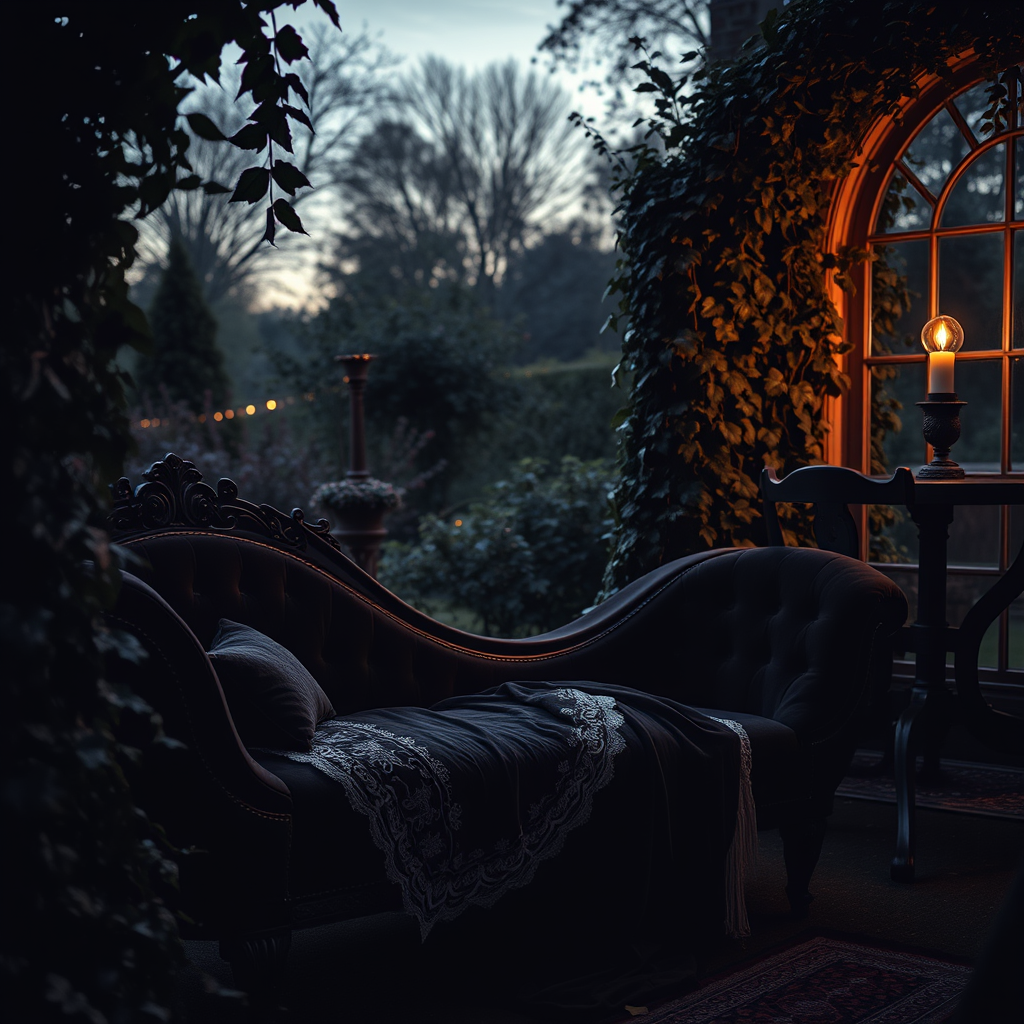
Where the Shadowed Hedgerow Meets the Velvet Night
The English landscape has long been a canvas for the macabre, a place where ancient oaks whisper secrets to the mist and the damp earth holds the weight of centuries. When we marry the deep, brooding tones of charcoal and the visceral intensity of velvet crimson, we unlock a sensory experience that transcends mere interior design or fashion. This is an exploration of the gothic aesthetic rooted firmly in the organic, untamed wildness of the British countryside. By embracing the decay of autumn leaves and the sharp, biting chill of a winter twilight, we create a sanctuary that is both sophisticated and dangerously sensual. It is a celebration of the hidden, the nocturnal, and the beautifully melancholic aspects of our natural world.
The Architecture of Shadows and Soil
To understand the gothic soul of the English ecology, one must first look to the soil itself, which serves as the foundation for our gothic aesthetic. The dark, nutrient-rich loam of a woodland floor provides the perfect charcoal palette, grounding the ethereal nature of our desires in something tangible and ancient. As the light fades behind the jagged silhouettes of hawthorn and blackthorn, the landscape shifts into a theater of shadows where the boundaries between the living and the dormant blur. This transition is not merely visual; it is a tactile invitation to touch the rough bark of a lichen-covered trunk or the velvet softness of moss clinging to a crumbling stone wall.
We find that the most compelling spaces are those that honor this duality of growth and decay. By incorporating elements like charred timber, weathered slate, and deep, saturated pigments, we mirror the complexity of a forest that is simultaneously thriving and decomposing. This is the essence of a sensual mood, where the environment feels alive, breathing with the slow, rhythmic pulse of the seasons. It is an invitation to slow down, to observe the intricate patterns of a spiderweb glistening with dew, and to appreciate the quiet power of the dark. You can explore more about the historical roots of these dark landscapes at The National Trust, which preserves the very grounds that inspire such deep, atmospheric contemplation.
Crimson Petals in the Gloom
Nothing pierces the charcoal shroud of the English gothic quite like the sudden, startling appearance of velvet crimson. Whether it is the blood-red berries of the holly bush or the deep, bruised petals of a late-blooming rose, this color acts as a heartbeat within the darkness. It represents the raw, unbridled passion that hides beneath the surface of a polite, restrained society. When we bring these tones into our personal spaces, we are making a statement about the intensity of our inner lives and our refusal to be dimmed by the grayness of the mundane.
The interplay of light and shadow is crucial when working with such a bold, evocative color palette. A single shaft of moonlight hitting a crimson velvet drape can transform a room into a scene from a classic Victorian novel, heavy with unspoken longing and hidden truths. It is about creating a narrative that feels both timeless and urgent, a story told in the language of textures and hues. For those interested in the psychological impact of these deep, dramatic colors, further reading on color theory in interior design can be found at Architectural Digest. By layering these rich tones, we cultivate an atmosphere that is not only visually striking but emotionally resonant, inviting us to delve deeper into our own private mysteries.
The Ecology of Secret Desires
The English countryside is a labyrinth of hidden paths and overgrown gardens, each one a testament to the English ecology that thrives in the absence of human interference. These wild, untamed spaces are the true heart of the gothic experience, where nature reclaims what was once ordered and manicured. There is a profound sensuality in the way ivy strangles a stone pillar or how a bramble thicket creates a barrier between the known world and the unknown. This is where our secrets reside, tucked away in the hollows of trees and beneath the canopy of ancient, weeping willows.
To engage with this ecology is to accept that beauty is often found in the imperfect and the ephemeral. We must learn to appreciate the way a flower wilts, the way a leaf curls as it dries, and the way the light changes as the sun dips below the horizon. This is the sophisticated mood that defines the modern gothic sensibility, a rejection of the sterile and the artificial in favor of the authentic and the raw. It is a reminder that we, too, are part of this cycle of growth and decline, and that there is a unique power in embracing our own complexities. By aligning our surroundings with the rhythms of the wild, we create a space that feels like a true extension of our own souls.
Weaving the Dark Tapestry
Bringing these elements together requires a delicate balance of restraint and indulgence, much like the art of storytelling itself. We start with the charcoal base, the dark canvas upon which we layer our textures and colors, ensuring that every choice feels intentional and grounded. We then introduce the velvet crimson, using it sparingly but effectively to draw the eye and stir the senses. Finally, we incorporate the organic elements—the dried branches, the pressed ferns, the stones gathered from a riverbed—to bridge the gap between the interior and the exterior worlds.
This process is an act of curation, a way of building a gothic aesthetic that is deeply personal and reflective of our own unique desires. It is not about following trends, but about creating a sanctuary that speaks to the parts of us that crave depth, mystery, and connection to the natural world. As we refine our spaces, we find that the boundaries between our inner lives and our outer environments begin to dissolve, leaving us in a state of constant, quiet inspiration. This is the ultimate goal of our design journey: to live in a space that is as complex, beautiful, and enduring as the English landscape itself. Through this practice, we honor the dark, the light, and everything that exists in the beautiful, velvet-draped space between.
Final Thoughts
The journey into the heart of the gothic English ecology is one that never truly ends, as the landscape itself is in a constant state of flux and transformation. By embracing the charcoal shadows and the velvet crimson highlights, we have created a framework for a life lived with greater depth and sensory awareness. We have learned that the most powerful spaces are those that allow us to confront our own secrets and desires in an environment that is both nurturing and provocative. May your own exploration of these themes lead you to a place of profound beauty, where the wildness of the English countryside meets the sophistication of your own inner world. Let the darkness be your guide, and let the velvet crimson be the pulse that keeps your spirit alive and yearning for more.